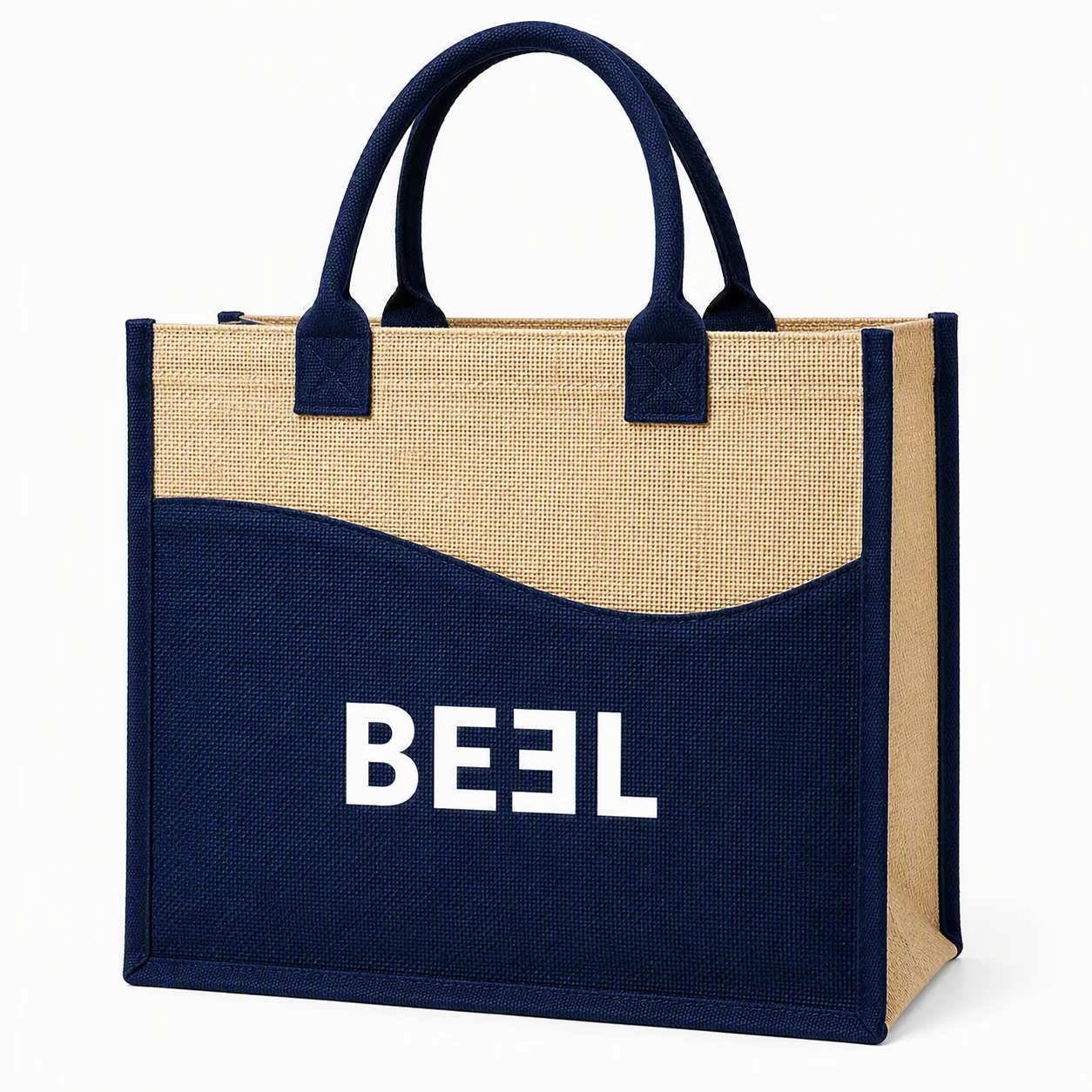
Most buyers who ask us for laminated jute bags have already been burnt once. They ordered a plain jute shopper, it looked lovely in the sample photo, and then it shed fibres on a customer's black kurta, went limp in the monsoon and lost its print after two washes. Somebody told them "get it laminated" and now they want to know what that actually means, what it costs and whether it ruins the eco story.
We have been cutting and stitching jute at our Mumbai factory since 1996, and lamination is the single most misunderstood part of a jute order. Two quotes for the "same" laminated bag can differ by Rs 20 because one supplier uses a 60 micron film and the other uses 25 micron, or because one bonds it properly and the other just tacks it at the seams.
This guide is the conversation we have with a retail buyer or a gifting company before we give a price. It covers the lamination types, the GSM that suits each use, real price bands, print options, what fails in production and how to check a sample before you sign off on 5,000 pieces.
What lamination on a jute bag actually is
Jute fabric is woven from thick, hairy yarn with visible gaps between threads. On its own it breathes, it scratches a little and it lets fine powder and water straight through. Lamination is a thin plastic layer bonded to one face of the fabric, almost always the inside, before the bag is cut. The bag still looks and feels like jute from outside. Inside you see a smooth, slightly shiny film.
The film is usually polypropylene (PP) or low density polyethylene (LDPE), applied hot from an extrusion coating machine at the mill in West Bengal. The mill sells us rolls that are already laminated, typically 50 to 60 inches wide. We do not laminate in Mumbai ourselves, and very few bag makers do. So when you ask a supplier about lamination, what you are really asking is which roll they bought and from whom.
There is a second, separate thing people also call lamination: a printed BOPP film glued on the outside of the bag, the kind you see on rice bags and glossy promotional totes. That is a different product with a different look and price, and we cover it further down.
Why lamination helps a jute bag
- The bag stands up on a shelf and keeps its shape after it is folded flat in a carton.
- Loose fibres stay on the outside instead of falling onto clothes, food packets or gift boxes.
- Light rain or a spilt water bottle does not soak through to the contents.
- Screen printing sits sharper because the ink does not sink through the weave.
- Rice, flour or tea powder does not dust out of the corners.
Types of lamination compared
Not every laminated jute bag is the same. The table below shows the four finishes we work with, where the film sits and what each one is good for.
| Finish | Where the film sits | Look and feel | Best for | Cost impact on a standard tote |
|---|---|---|---|---|
| Inner PP or LDPE coating (standard) | Inside face, full panel | Natural jute outside, smooth film inside | Retail shoppers, grocery, event bags | Plus Rs 3 to Rs 6 |
| Heavy inner coating (50 to 60 micron) | Inside face, thicker layer | Stiffer bag, holds a box shape | Wine and bottle bags, heavy grocery, export retail | Plus Rs 6 to Rs 10 |
| Outer BOPP printed film | Outside, glued over jute | Glossy or matte photo print, jute visible only at gusset | FMCG promotions, full colour artwork, rice and atta packs | Plus Rs 15 to Rs 35 with printing |
| Partial or panel lamination | Outer BOPP only on front and back panels | Printed panels framed by natural jute | Premium gifting, boutique retail | Plus Rs 20 to Rs 40 |
For 80 percent of the orders we take, the standard inner coating is enough. Heavy coating is worth paying for when the bag carries glass or more than 5 kg. Outer BOPP only makes sense if your artwork is a photograph or has more than four colours, because screen printing that design on raw jute will never look right.
GSM, size and the job the bag has to do
GSM is grams per square metre of the jute fabric before lamination. A heavier fabric gives a firmer bag, but it also adds cost and weight to your freight. The trick is matching GSM to the actual load, not to a word like "premium" in the brief.
This table shows the combinations we recommend most often, with the load each one handles comfortably day after day.
| Fabric GSM | Typical size (W x H x gusset) | Comfortable load | Common use |
|---|---|---|---|
| 220 to 250 | 10 x 12 x 3 inch | Up to 3 kg | Return gifts, small retail, conference giveaways |
| 260 to 300 | 14 x 12 x 4 inch | 4 to 6 kg | Standard shopping bag, apparel stores, events |
| 300 to 340 | 16 x 14 x 6 inch | 6 to 9 kg | Supermarkets, home goods, export retail |
| 320 to 360 | 14 x 4 x 4 inch (single bottle) | One 750 ml bottle | Wine, oil and spirits gifting |
| 340 to 380 | 18 x 15 x 7 inch | 8 to 12 kg | Rice and grain packs, heavy grocery totes |
A mistake we see every Diwali season: a gifting company orders a 220 GSM bag to carry a dry fruit box, a candle and a steel bottle. The box alone is close to 2 kg, and the bag looks sad by the time it reaches the employee. Moving to 280 GSM adds about Rs 6 a bag at 1,000 pieces and saves the whole impression. If you are working out what suits a full hamper, our festival gift hamper page shows the hamper combinations these bags usually carry.
Laminated jute bags price in India
Prices depend on fabric rate (which moves with the raw jute crop), GSM, size, handle and print. The bands below are what we quote for one colour, one side screen print with inner lamination, delivered within Mumbai. Treat them as a starting point; a bulk pricing request with your exact size gets you a firm number within a day.
| Bag | 500 pieces | 1,000 pieces | 5,000 pieces |
|---|---|---|---|
| Small gift bag, 10 x 12 x 3 inch, 240 GSM | Rs 38 to Rs 50 | Rs 32 to Rs 44 | Rs 27 to Rs 36 |
| Shopping tote, 14 x 12 x 4 inch, 280 GSM, cotton webbing handle | Rs 62 to Rs 85 | Rs 55 to Rs 78 | Rs 46 to Rs 65 |
| Single bottle bag, 14 x 4 x 4 inch, rope handle | Rs 52 to Rs 70 | Rs 45 to Rs 65 | Rs 38 to Rs 54 |
| Large shopper, 16 x 14 x 6 inch, padded rope handle, 2 colour print | Rs 95 to Rs 130 | Rs 85 to Rs 120 | Rs 72 to Rs 100 |
| Premium tote with zip, inner pocket and outer BOPP panel | Rs 220 to Rs 300 | Rs 190 to Rs 260 | Rs 160 to Rs 220 |
Our minimum for laminated jute is usually 200 pieces, and we can do 100 for a standard size if the fabric is in stock. Full details are on the minimum order quantity page. If you want to see how these numbers compare with unlaminated jute and juco, we broke that down in our post on jute bags wholesale price.
What pushes a quote up or down
When two suppliers are Rs 15 apart on the same spec, one of these is almost always the reason.
| Factor | Cheaper option | Costlier option | Typical difference per bag |
|---|---|---|---|
| Lamination thickness | 20 to 25 micron | 50 to 60 micron | Rs 3 to Rs 6 |
| Handle | Self jute handle | Padded cotton rope or leatherette | Rs 8 to Rs 25 |
| Print colours | 1 colour, 1 side | 3 colours, both sides | Rs 6 to Rs 15 |
| Gusset | Flat bag, no gusset | 4 to 6 inch box gusset | Rs 5 to Rs 12 |
| Closure | Open top | Zip or button with loop | Rs 10 to Rs 22 |
| Fabric | Natural jute | Dyed jute (red, black, green) | Rs 4 to Rs 9 |
| Packing | Bulk cartons of 100 | Individual poly bag or folded with tag | Rs 1 to Rs 4 |
Printing on laminated jute
Inner lamination does not change the outside surface, so you are still printing on jute. It does stop ink bleeding through, and that makes edges crisper. Here is what works, what it costs and where each method falls short.
| Print method | Best for | Colour limit | Extra cost per bag (1,000 pcs) | Watch out for |
|---|---|---|---|---|
| Screen printing | Logos, text, bold shapes | Up to 4 spot colours | Rs 4 to Rs 8 per colour per side | Fine lines under 1 mm fill in on coarse weave |
| Heat transfer (plastisol transfer) | Small multicolour logos | Full colour | Rs 10 to Rs 20 | Can crack if the bag is folded hard at the print |
| Outer BOPP film | Photographs, gradients, full panel art | Full colour, gloss or matte | Rs 15 to Rs 35 | Cylinder or plate cost makes it uneconomical under 2,000 pcs |
| Embroidered patch | Fashion and boutique retail | Thread colours | Rs 18 to Rs 40 | Adds a day or two to lead time |
We screen print in-house, and it is what we recommend for most corporate and retail logos. A two colour logo printed with plastisol ink on 280 GSM laminated jute will outlast the bag. If your logo has a thin script font, ask us to thicken the strokes slightly; our artwork team does this for free and it saves a reprint. You can see examples of finished work on our printed jute bag and screen printed bags pages.
The eco question: is a laminated jute bag still green?
This is the question we get most from export buyers and from brands with a sustainability team. An honest answer: lamination makes the bag less biodegradable. The jute part will break down; the PP or LDPE film will not. A laminated jute bag is a long-life reusable bag, not a compostable one, and it should be marketed that way.
Where it still wins is reuse. An unlaminated jute bag that sags after five uses ends up in a cupboard. A laminated one that keeps its shape gets carried to the vegetable market for two years. For a brand, that is more impressions and a better use of the material.
Here is how the options compare on the points a sustainability buyer will ask about.
| Option | Biodegradable | Water resistance | Typical working life | How to describe it on your label |
|---|---|---|---|---|
| Plain jute, no lamination | Yes, fully | Low | Months, depending on load | Natural, biodegradable jute bag |
| Jute with inner PP or LDPE lamination | Jute part only | Good against splashes | 1 to 3 years of regular use | Reusable jute bag with protective lining |
| Juco (jute and cotton blend), unlaminated | Yes, fully | Low to medium | 1 to 2 years | Natural fibre blend bag |
| Jute with cotton or calico lining instead of film | Yes, fully | Low | 1 to 2 years | Plastic-free lined jute bag |
If your brand promise is "plastic-free", skip the lamination and ask for a stitched cotton lining or a juco fabric. It costs Rs 8 to Rs 15 more on a standard tote but your claim stays clean. We wrote about the wider choice in our eco-friendly bags buyer's guide, and the non-woven vs jute vs canvas comparison covers the same trade-off across materials. Plain cotton bags and canvas bags are the other route if lamination is a deal breaker.
Who orders laminated jute bags, and what they usually choose
Over the years the same handful of buyer types make up most of our laminated jute volume. Each has a pattern, and knowing it helps you skip a few rounds of samples.
| Buyer | Usual spec | Typical quantity | What they care about most |
|---|---|---|---|
| Apparel and lifestyle stores | 14 x 12 x 4 inch, 280 GSM, webbing handle, 1 to 2 colour logo | 1,000 to 5,000 per season | Shape on the counter, clean fibre-free inside |
| Supermarkets and organic stores | 16 x 14 x 6 inch, 320 GSM, padded rope handle | 2,000 to 10,000 | Load strength, low unit price |
| Corporate gifting companies | Tote with zip and inner pocket, dyed or natural | 200 to 2,000 | Finish, handle feel, on-time delivery |
| Wine, oil and spirits brands | Single or two bottle bag with divider, heavy lamination | 500 to 3,000 | Rigid shape, no seepage if a bottle leaks |
| Rice, tea and dry fruit brands | Outer BOPP printed bag or pouch, 1 to 10 kg | 5,000 and above | Shelf appeal, no powder leaking |
| Exporters and overseas retailers | Custom size, natural jute, private label tag | 3,000 to 20,000 | Consistent shade across lots, carton packing |
Retailers who want a full range rather than one bag can see everything on bags for retail stores, and our post on retail shopping bags wholesale compares jute with paper and non-woven for store use.
Lead times for laminated jute orders
Laminated rolls are not always on our shelf in every GSM and shade. Natural 280 to 300 GSM laminated fabric we keep in stock most of the year. Dyed or heavy coated rolls come from Kolkata mills and take about a week by road. These are realistic timelines from approved artwork to dispatch.
| Order size | Stock fabric | Dyed or special fabric | Outer BOPP printed |
|---|---|---|---|
| 200 to 1,000 pcs | 8 to 12 working days | 14 to 18 working days | Not usually economical |
| 1,000 to 5,000 pcs | 12 to 18 working days | 18 to 24 working days | 22 to 30 working days |
| 5,000 to 20,000 pcs | 18 to 28 working days | 25 to 35 working days | 28 to 40 working days |
October to early November is our busiest period because of Diwali and wedding season gifting. If your event falls then, lock fabric by early September. A sample takes 3 to 5 working days from us and is worth every rupee.
What goes wrong with laminated jute, and how to catch it in the sample
Most problems with laminated jute show up in the first week of use, not on the day the cartons arrive. These are the faults we reject on our own floor during quality control, and you should look for them in any sample from any supplier.
Delamination at the folds
Fold the sample sharply along the gusset ten times and look inside. If the film lifts in a white crease or peels away like a sticker, the bond is weak. That bag will start crackling and flaking within a month. Good lamination creases but stays stuck.
Thin or patchy film
Hold the inside up to a tube light. You should see an even shine. Dull patches or pinholes mean the coating was too thin at that point in the roll, and water will come through there first.
Weak handle joints
Lamination makes jute slippery to stitch through, and some units cut corners with a single line of stitching. Look for a box stitch with a cross (an X inside a square) at each handle, and ask for a reinforcement patch on bags meant for more than 5 kg. Hang 8 kg of rice from one handle for an hour. A properly made bag does not care.
Smell
Raw jute has a natural batching oil smell, and fresh lamination can add a plastic note. A strong smell usually means cheap batching oil or film stored badly. Airing reduces it, but for food or gifting orders ask the supplier which oil the mill uses. Fabric processed with vegetable-based batching oil generally smells much milder.
Pre-delivery checklist
- Measure three random bags against the approved size, allowing half an inch either way.
- Check print registration and colour against the approved sample in daylight.
- Fold-test five bags from different cartons.
- Count pieces in one carton and check the carton marking matches your PO.
- Keep one bag from the lot aside as your reference for the next reorder.
Laminated jute for export orders
A large share of our laminated jute output goes overseas, mainly to the UAE, UK and Europe. Export buyers usually want natural shade, private label sewn tags and very consistent colour across lots, because a retailer in Dubai does not want two shades of beige on the same shelf. We ask the mill for fabric from a single batch for each export lot and keep a swatch on file.
Laminated bags also pack flatter and survive sea freight better than unlaminated ones, which do not like humid containers. If you are buying for the Gulf, our page for a bag supplier in the UAE covers shipping times, and the guide on how to import bags from India walks through documentation. You can also read more about our export side as an exporter of bags from India.
Laminated jute vs the alternatives
Sometimes a buyer comes in asking for laminated jute and leaves with something else, because it fits the budget or the brand better. Here is the quick version of that conversation.
- If the budget is under Rs 25 a bag at 1,000 pieces, look at non-woven instead. Jute cannot get there honestly.
- If the brand wants a soft, washable bag for daily use, cotton or canvas usually wins.
- If the bag is for a one-day event and will be thrown away, plain jute or paper is enough.
- If it needs to carry bottles, grocery or anything damp, laminated jute is what you want.
For gifting buyers comparing bags for a festive campaign, our Diwali corporate gifting bags guide lays out the options side by side, and the corporate gift bags range shows finished pieces. Families ordering for weddings tend to go for the small laminated pouch; see our wedding return gift bags guide for sizes.
How to order laminated jute bags from us
The process is simple, and most orders go from first message to dispatch in two to three weeks.
- Send us the quantity, size (or what the bag will carry), handle preference, print colours and your delivery date on WhatsApp or through the contact page.
- We reply with a quote, usually within a day, and a digital mock-up of your logo on the bag.
- You approve the mock-up, and we make a physical sample in 3 to 5 working days. Courier within India is at your cost or adjusted in the order.
- Once the sample is approved and the advance is paid, we book fabric and start production.
- We share photos or a video from the floor before packing, then dispatch by road transport or courier anywhere in India, or to port for export.
You can browse the base designs first on our laminated jute bag page and the wider jute bags range, including the plain jute tote bag. Buyers who want to visit can come to the unit; our jute bag manufacturing in Mumbai page has the details.
Frequently asked questions
Are laminated jute bags waterproof?
They are water resistant, not waterproof. The film stops splashes and light rain, but water can still get in through stitch holes and the open top. For fully waterproof use, a coated canvas or PVC lined bag is better.
Can laminated jute bags be washed?
Wipe them with a damp cloth. Do not machine wash or soak them, because hot water and wringing break the bond between film and fabric and the jute shrinks unevenly.
What is the minimum order for laminated jute bags?
Usually 200 pieces, and 100 pieces for standard sizes when stock fabric is available. Outer BOPP printed bags need around 2,000 pieces to make sense.
Is the lamination on the inside or outside?
On a standard laminated jute bag it is on the inside, so the bag looks natural. Outer lamination is a printed BOPP film used when you need photographic artwork.
Are laminated jute bags safe for food?
They are widely used for packed dry goods such as rice, atta and tea. For loose food in direct contact with the film, ask for a food-contact declaration on the laminate from the mill before you order, and we will source it for you.
How long does a laminated jute bag last?
With normal shopping use, one to three years. Handle stitching and fold creases are what give out first, which is why we check them on every lot.
If you have a quantity and a date in mind, send us the details on WhatsApp at +91 86525 70502 or through our contact page, and we will come back with a price, a mock-up and a sample plan within a working day.