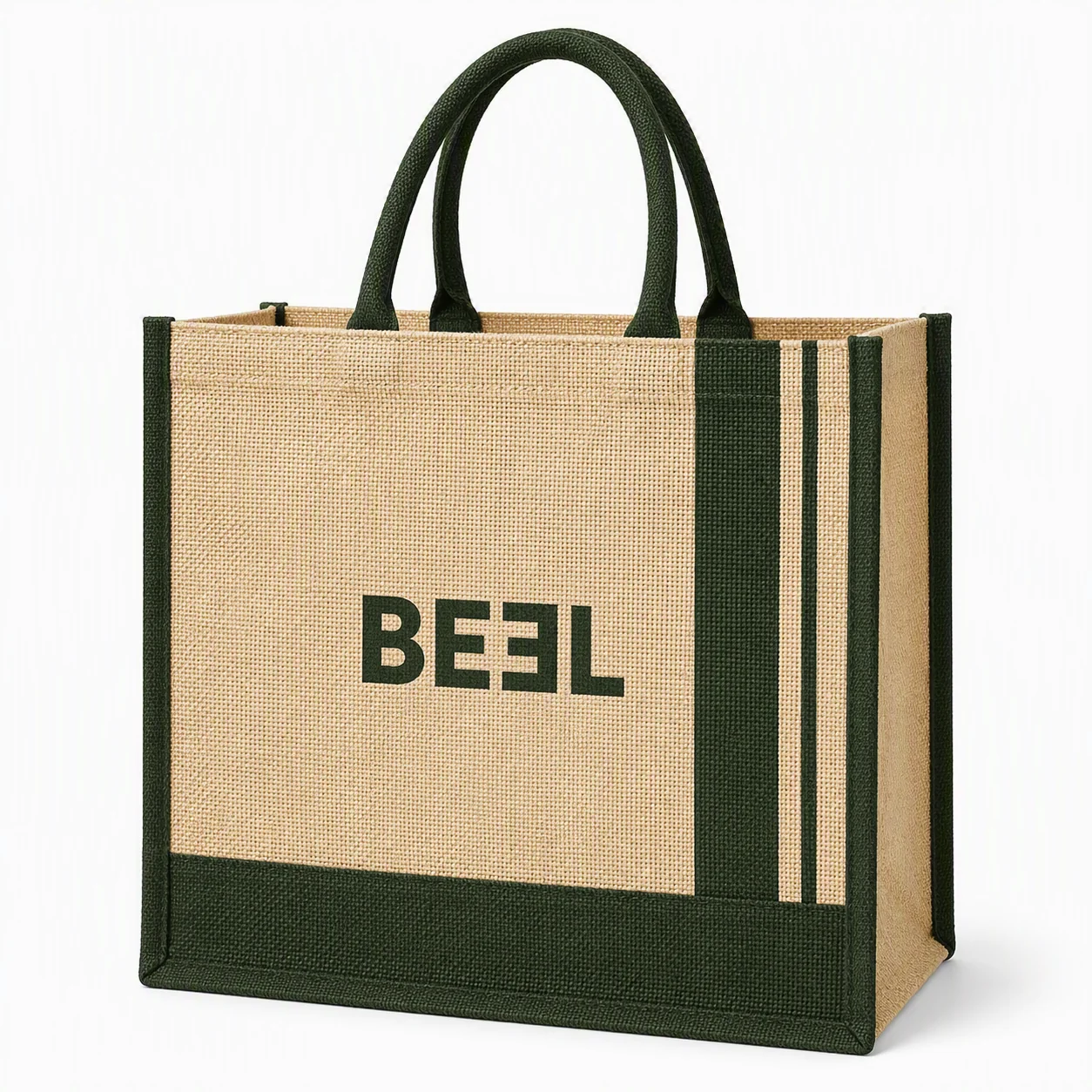
Search for "jute bags wholesale price" and you will find listings at Rs 6 a piece sitting right next to listings at Rs 190 a piece. Both are real prices. They are just not prices for the same bag, and that is where most first-time buyers get stuck. A procurement manager sends us a screenshot of a Rs 6 listing and asks why our quote for a printed shopping bag is Rs 72. The honest answer is that the Rs 6 item is usually a small hessian pouch or a loose sack with no handles, no lining and no print.
We have been cutting and stitching jute in our Mumbai unit since the late nineties, and the questions have not changed much. How much should a jute bag cost at 500 pieces? Why does the same size cost Rs 15 more from one supplier? What adds to the price and what is just padding on the quote?
This guide answers those questions with the numbers we actually work with. Every figure below is a rough band, not a fixed rate card, because jute fabric prices move with the raw jute crop and handle and print choices change the cost of each piece. Use it to sense-check quotes before you place a bulk order.
Jute bag wholesale price at a glance
Here are the price bands we quote most often for custom jute bags at 1,000 pieces, ex-factory Mumbai, before GST and freight. The first column is the bag type buyers ask for, and the last column is the use we see it bought for most often.
| Bag type and size | Typical spec | Price per piece at 1,000 pcs | Common use |
|---|---|---|---|
| Small drawstring pouch, 6 x 8 inch | Natural jute, cotton drawcord, no lining | Rs 18 to Rs 30 | Return gifts, dry fruit, jewellery packing |
| Wine or bottle bag, 14 x 4 x 4 inch | Laminated jute, single rope handle | Rs 45 to Rs 65 | Liquor brands, Diwali hampers |
| Standard shopping tote, 14 x 12 x 4 inch | Laminated jute, cotton webbing handles, 1 colour print | Rs 55 to Rs 80 | Retail stores, events, conferences |
| Large shopper, 16 x 14 x 6 inch | Laminated jute, padded rope handles, 2 colour print | Rs 85 to Rs 120 | Supermarkets, premium retail, corporate gifting |
| Juco (jute-cotton) tote, 15 x 14 x 5 inch | Juco fabric, cotton handles, inner pocket | Rs 95 to Rs 140 | Brand merchandise, export orders |
| Jute laptop or office bag, 16 x 12 x 3 inch | Jute with canvas trim, zip, padded section | Rs 260 to Rs 420 | Corporate gifting, conference kits |
Two things move a quote above these bands more than anything else: very small quantities (under 300 pieces) and full-colour artwork. Two things bring it below: plain bags with no print, and orders above 5,000 pieces where we can buy fabric by the bale and keep one machine line on a single size for a week.
What a jute bag price is actually made of
If you understand the cost sheet, you can tell a fair quote from an inflated one in about two minutes. On a typical 14 x 12 x 4 inch laminated shopping bag, here is roughly where the money goes.
Fabric (40 to 50 percent of the price)
Jute fabric comes to us mostly from mills in West Bengal, sold by the metre or by the roll. Shopping bag fabric usually sits between 250 and 350 GSM. A bag of this size uses a little under half a metre of 50 inch wide cloth once you account for the gusset, the hem and cutting waste. When raw jute prices rise after a weak crop, this is the line that moves, and an honest supplier will tell you so instead of quietly cutting GSM.
Lamination (5 to 10 percent)
Most retail jute bags have a thin PP lamination on the inside. It stops loose fibres shedding onto clothes, keeps the bag upright on a shelf and gives the print a flatter surface. Lamination adds roughly Rs 3 to Rs 6 per bag at this size. Unlaminated jute looks more rustic and breathes better, which is why we still recommend it for onion and potato sacks, gift pouches and some export buyers who want the bag fully natural.
Handles (10 to 15 percent)
Self-jute handles are the cheapest. Cotton webbing adds Rs 4 to Rs 8. Padded rope handles, the soft round ones you see on premium shoppers, add Rs 10 to Rs 18 depending on length and thickness. Buyers often underestimate how much the handle changes the feel of the bag in a customer's hand. On a Rs 70 bag, spending an extra Rs 6 on proper cotton handles is usually the best money in the whole order.
Printing (5 to 20 percent)
Screen printing on jute is charged per colour, per side. A single-colour logo on one side adds about Rs 3 to Rs 6 at 1,000 pieces, plus a one-time screen charge of roughly Rs 600 to Rs 1,200 per colour. Multi-colour designs and both-side printing climb quickly, which we cover in detail further down.
Stitching, finishing and packing (15 to 20 percent)
This covers cutting, stitching, gusset folding, thread trimming, checking each bag and packing in bundles of 25 or 50 into gunny bales. Labour in Mumbai is not cheap, and this is one area where you get what you pay for. Loose stitching at the handle joint is the number one reason jute bags come back as complaints.
GSM, lamination and handle choices compared
Buyers often ask us for "the best quality jute" without saying what the bag will carry. A wedding favour pouch and a supermarket shopper that carries 6 kg of groceries need very different fabric. This table is how we usually guide the choice.
| Fabric weight | Feel and look | Safe carrying load | Best for | Price effect |
|---|---|---|---|---|
| 200 to 250 GSM | Light, slightly see-through, coarse weave | Up to 3 kg | Pouches, favour bags, light promotional totes | Lowest |
| 260 to 300 GSM | Firm, holds shape with lamination | 4 to 6 kg | Standard retail and event shopping bags | Base price |
| 310 to 350 GSM | Thick, tight weave, prints sharper | 6 to 9 kg | Supermarkets, premium retail, export | Plus Rs 6 to Rs 12 |
| Juco (jute-cotton blend) | Smoother, softer, takes fine print well | 5 to 8 kg | Brand merchandise, gifting, fashion retail | Plus 25 to 40 percent |
For most retail stores we recommend 280 to 300 GSM with lamination and cotton handles. It is the sweet spot between cost and a bag that customers keep using. Going up to 340 GSM only makes sense if the bag will carry heavy items or if the brand wants a thicker, more expensive feel in the hand.
If you want a closer look at lamination itself, our laminated jute bag page shows the inner finish. For a natural, unlaminated look with a softer weave, Juco is the better route. We break down how jute, canvas and non-woven compare on price and durability in our non-woven vs jute vs canvas comparison.
How order quantity changes the price per bag
Our minimum order for standard jute designs is 100 pieces, and 200 pieces for laminated or custom shapes. You can see the full breakdown on our minimum order quantity page. But a 100-piece order and a 5,000-piece order of the same bag will never be quoted at the same rate, and here is why.
Setup costs do not change with quantity. Making a print screen, setting up the cutting pattern, adjusting the stitching machine for a new gusset width and doing the first sample all take the same time whether we make 100 bags or 10,000. Spread over 100 pieces, that setup adds Rs 10 to Rs 15 per bag. Spread over 5,000, it almost disappears.
As a rough guide, on a printed 14 x 12 x 4 inch laminated tote:
- 100 to 299 pieces: Rs 90 to Rs 115 per bag
- 300 to 999 pieces: Rs 70 to Rs 90 per bag
- 1,000 to 4,999 pieces: Rs 55 to Rs 80 per bag
- 5,000 pieces and above: Rs 48 to Rs 68 per bag
One practical tip: if you need 700 bags now and know you will reorder in three months, tell us. We can sometimes quote the 1,000-piece rate, buy the fabric in one lot and hold the extra rolls, so your second batch matches the first exactly in shade. Jute colour varies slightly from roll to roll, and matching shade across two separate fabric purchases is harder than most people expect. Our bulk pricing page has the general slabs we use across all bag types.
Printing costs on jute bags
Jute has a coarse, open weave, so not every print method suits it. Of all the choices on a jute bag, printing is the one most likely to separate a bag that looks premium from one that looks cheap.
Screen printing
This is what we use on 90 percent of jute orders. Thick ink pushed through a mesh screen sits well on the jute surface, especially on laminated fabric. It works best for logos with one to three solid colours. Screen printed bags hold up through repeated use, and the ink does not crack as long as the design avoids very thin lines under about 1 mm.
Multi-colour and photo designs
For gradients, photographs or more than four colours, screen printing gets expensive because each colour needs its own screen and its own pass. Heat transfer prints can manage full colour, but on raw jute the transfer film sometimes lifts at the edges after a few months. If your design needs full colour, we usually suggest Juco fabric, which has a smoother surface, or a printed canvas patch stitched onto the jute body.
What printing adds per bag
- 1 colour, 1 side: Rs 3 to Rs 6
- 2 colours, 1 side: Rs 6 to Rs 10
- 1 colour, both sides: Rs 6 to Rs 11
- Full colour on Juco or a patch: Rs 15 to Rs 30
These are at 1,000 pieces. Add the one-time screen charge for each colour. If you reorder the same design within about six months, we usually still have the screen and you will not pay again. For printed options already in our range, see printed jute bags and logo printed bags.
Why two quotes for the "same" jute bag differ by Rs 20
This is the most common question we get on WhatsApp. A buyer has three quotes, Rs 58, Rs 66 and Rs 79, all for a "14 x 12 x 4 printed jute bag", and wants to know who is cheating. Usually nobody is. The quotes just describe different bags. Before you compare, ask each supplier to confirm these points in writing:
- Fabric GSM. A 240 GSM bag and a 300 GSM bag look similar in a photo. In the hand, the difference is obvious.
- Lamination thickness. Some suppliers use a very thin film that peels at the folds within weeks.
- Handle type and length. A 20 inch self-jute handle and a 24 inch cotton webbing handle are not the same cost.
- Gusset. A 4 inch gusset uses noticeably more fabric than a 2 inch one.
- Print size. A 4 x 4 inch logo and a 10 x 8 inch design are priced differently, even if both are "1 colour".
- Freight and GST. Some quotes are delivered, some are ex-factory, and some leave GST out until the invoice.
A pharma distributor once came to us after their earlier supplier delivered bags at 220 GSM against an order that assumed 300. Nobody had written the GSM on the purchase order, so there was nothing to dispute. Put the specification in writing, every time. Our quality control page explains what we check on each batch before dispatch.
Lead times and seasonal demand
For a standard printed jute shopping bag, our usual timeline after artwork approval is:
- Sample: 3 to 5 working days
- Up to 1,000 pieces: 10 to 15 days
- 1,000 to 5,000 pieces: 15 to 25 days
- Above 5,000 pieces: 25 to 35 days, sometimes split into two dispatches
These stretch in two seasons. From late August to the start of Diwali, gifting and festive orders fill every machine line. From October to February, the wedding season brings in a steady flow of potli and return gift orders. If your event falls in either window, start the conversation at least six weeks ahead. Our guide to wedding return gift bags covers how to plan those orders around peak dates.
Freight is the other piece people forget. Within Mumbai and Thane, we deliver in our own tempo or through a local transporter in one to two days. For Delhi, Bengaluru, Chennai or Kolkata, road transport usually takes four to seven days. A carton of 100 laminated shopping bags weighs roughly 18 to 22 kg, so freight on a 1,000-piece order to another metro typically adds Rs 1.50 to Rs 3 per bag.
Jute bag prices by buyer type
Different buyers end up in very different price bands because they need different bags. Here is what we see most often.
Retail shops and supermarkets
Stores want a bag that customers reuse so the logo keeps travelling. Most choose 280 to 300 GSM laminated jute, cotton handles and a one or two colour logo, landing between Rs 55 and Rs 85 at 1,000 to 3,000 pieces. Some charge customers Rs 40 to Rs 60 at the counter to recover part of the cost. Our bags for retail stores page shows typical retail formats.
Corporate gifting and HR teams
Here the bag is part of the gift, so buyers move up to Juco or padded handles, add an inner pocket and sometimes a zip. Budgets of Rs 120 to Rs 250 per bag are common. Jute pairs well with a diary, a bottle and a plant in an eco-themed kit. See our corporate gifting range for combinations we have built for HR teams.
Weddings and family functions
Small pouches and potlis between Rs 25 and Rs 70 are the norm, often with the couple's initials or a simple motif. Quantities run from 200 to 1,500. Many families also ask for a slightly larger bag for the main guests, so plan two sizes instead of one.
Exporters and overseas brands
Export buyers in the UK, Europe and the Gulf usually want heavier fabric, Juco blends, specific handle lengths and private labels. Prices are often quoted in dollars or euros FOB Nhava Sheva. Volumes start around 2,000 pieces per design. Our page on being an exporter of bags from India covers documentation and timelines.
Mistakes that make jute bags cost more than they should
After decades on the factory floor, we see the same few mistakes push buyers over budget.
Changing the artwork after the screen is made. Every change means a new screen and often a new sample. Finalise the logo file in vector format (AI, CDR, EPS or a clean PDF) before you approve the quote.
Choosing an odd size by a few inches. Our cutting patterns are built around common sizes. A 13.5 x 11.5 inch bag costs more than a 14 x 12 inch bag because it wastes fabric across the width of the roll. Unless the size really matters for the product inside, stick to a standard.
Ordering in three small lots instead of one. Three orders of 300 pieces cost noticeably more than one order of 900, and the shade may not match between batches.
Skipping the sample to save four days. A sample costs a few hundred rupees and catches handle length, print placement and colour issues before 2,000 bags are stitched. We have never seen a buyer regret approving a sample. We have seen plenty regret skipping one.
Asking for printing very close to the seams. Ink near a stitched edge smudges during stitching. Keep the print at least 1.5 inches from every side seam and from the top hem.
Is jute the right material for your budget?
Jute is not always the cheapest choice, and we will tell you that on the first call. If you need 10,000 bags for a one-day event at the lowest possible cost, a non-woven bag will do the job for a third of the price. If the bag needs to look good in a premium store and survive two years of use, jute or canvas is worth the extra cost.
For buyers comparing materials, cotton bags print more sharply and fold flat, which helps for mailer packaging. Canvas bags cost more than jute but last longer and take full-colour prints better. Jute's strengths are its natural look, stiffness and the strong eco signal it sends at the counter. You can read why retailers are moving to it in our post on jute bag trends for retailers, and a broader material comparison in our eco-friendly bags buyer's guide. If paper is also on your shortlist, our guide to custom printed paper bags has its own price bands.
How to order jute bags from us
Our process is simple, and most orders move from first message to dispatch in under four weeks.
- Share your requirement. Send quantity, size (or what the bag will carry), handle preference, print colours and your delivery date on WhatsApp or through our contact page. A photo of a bag you like helps a lot.
- Get a written quote. We send a quote that lists GSM, lamination, handle, print size, colours, packing and freight terms, so you can compare it fairly.
- Approve a sample. We make a physical sample in 3 to 5 days, or share a photo and video if you are outside Mumbai.
- Confirm with an advance. Production starts once the sample and artwork are approved and the advance is received.
- Production and checks. Fabric cutting, printing, stitching and finishing happen in-house. You can see how this works on our manufacturing process page.
- Dispatch. Bags are bundled, packed in bales or cartons and sent with an invoice and packing list.
Buyers in Mumbai, Thane and Navi Mumbai are welcome to visit and see fabric options in person. Details for local buyers are on our jute bag manufacturer in Mumbai page, and we also supply north Indian buyers regularly, as covered on our jute bags for Delhi page.
Frequently asked questions
What is the wholesale price of a jute bag in India?
A printed, laminated jute shopping bag of about 14 x 12 x 4 inches costs roughly Rs 55 to Rs 80 at 1,000 pieces. Small pouches start around Rs 18, and premium Juco totes go up to Rs 140 or more. GST and freight are extra.
Why are some jute bags listed at Rs 6 to Rs 10 online?
Those prices are almost always for tiny hessian pouches or plain sacks with no handles, no lamination and no print. They are not comparable to a printed shopping bag.
What is the minimum order for custom jute bags?
We accept 100 pieces for standard designs and 200 pieces for laminated or custom shapes. Per-piece prices drop noticeably from 300 and again from 1,000 pieces.
How long does a bulk jute bag order take?
About 10 to 15 days for up to 1,000 pieces and 15 to 25 days for up to 5,000, after sample and artwork approval. Add one to two weeks during the Diwali and wedding seasons.
Is laminated jute still eco-friendly?
Laminated jute has a thin plastic film inside, so it is less natural than plain jute, but it lasts far longer in daily use. If you need a fully natural bag, choose unlaminated jute or Juco.
Can you print full-colour photos on jute?
Not cleanly on raw jute. For photos or gradients, we recommend Juco fabric or a printed canvas patch stitched onto the bag.
Is GST included in jute bag quotes?
Our quotes list GST separately. The rate depends on the HSN code the bag falls under, which we state on the quote and invoice so your accounts team can claim input credit.
If you have a quantity and a rough budget in mind, send it across and we will tell you which jute spec fits, with a written quote within a working day. Message us on WhatsApp at +91 86525 70502 or fill in the form on our contact page, and include a photo of any bag you like.