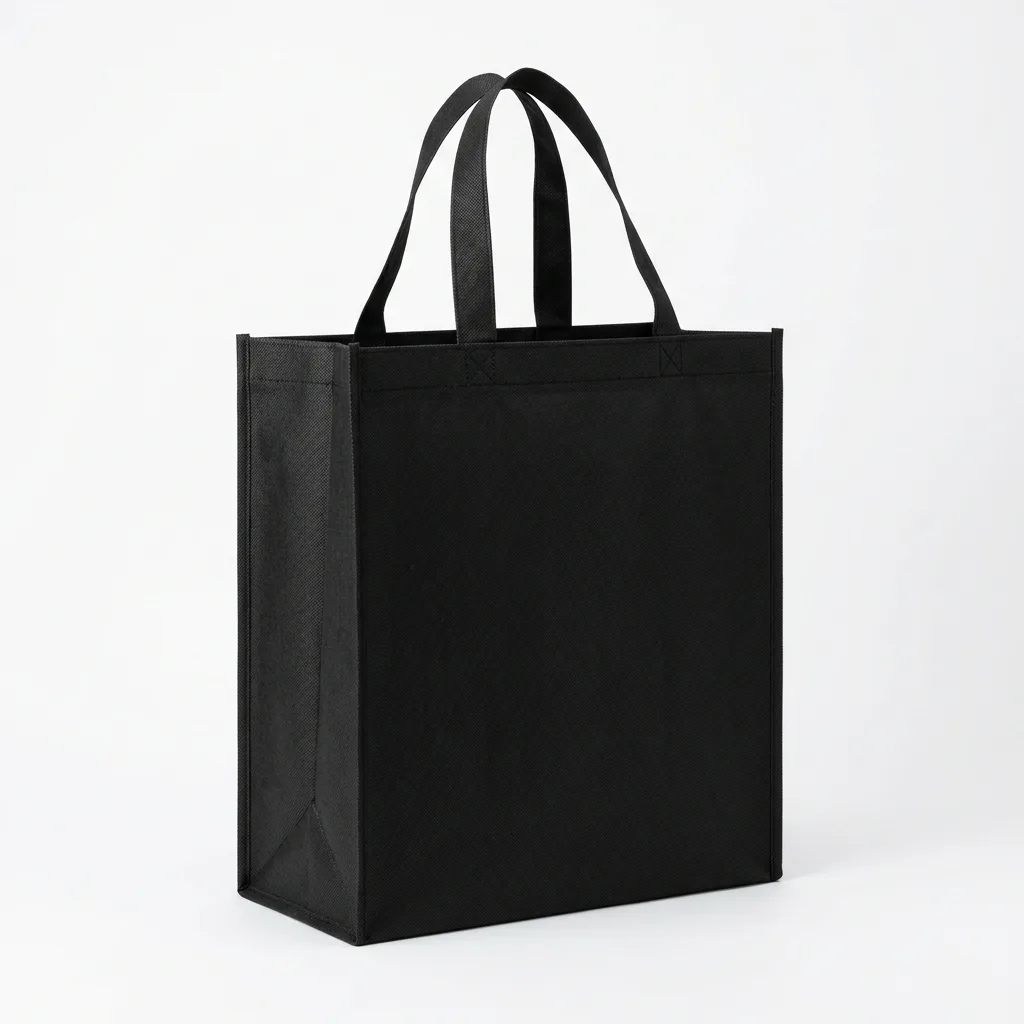
Every few months a customer calls us with the same worry, usually after a WhatsApp forward or a municipal notice: "Are non-woven bags banned now?"
The short answer is no. Non-woven polypropylene carry bags are legal to manufacture, sell and distribute in India. But they are regulated, and the rule that matters most is one a lot of buyers have never heard of — a minimum weight threshold that makes a large share of the cheap non-woven bags floating around the market non-compliant.
If you are buying in bulk, the liability for what lands in a customer's hand does not stop at your supplier. This guide covers what the rules actually say, what to check before you place an order, and what changed in 2026.
The rule that matters: 60 GSM
Under the Plastic Waste Management (Amendment) Rules, 2021, each sheet of a non-woven plastic carry bag must not be less than 60 GSM in thickness, with effect from 30 September 2021.
GSM means grams per square metre. It is a measure of how much material is in the fabric, not how thick it feels. This is the single most common point of confusion we deal with, so it is worth being blunt about it: a bag can look and feel substantial and still be under 60 GSM, and a well-made 60 GSM bag can feel lighter than a poorly made 70 GSM one. You cannot judge GSM by hand. You have to ask for it, and ideally verify it.
For context, the same amendment set the thresholds for conventional plastic carry bags at 75 microns or more after 30 September 2021, and 120 microns or more after 31 December 2022. Microns measure film thickness; GSM measures fabric weight. They are not interchangeable units, and a supplier who quotes microns for a non-woven bag is either confused or hoping you are.
Why the threshold exists
The logic behind the 60 GSM floor is not arbitrary. Very light non-woven bags behave like single-use plastic: they tear after one or two uses, they are not worth collecting for recycling, and they end up in the same waste streams the rules were written to reduce. Setting a minimum weight pushes the product toward being genuinely reusable, which is the entire justification for non-woven as a carry bag material in the first place.
This is also why the "is it banned?" question keeps resurfacing. Non-woven fabric is plastic — polypropylene. It is not cloth, despite being sold as "non-woven fabric" and despite the way it is often marketed. Bags below the threshold are not a grey area. They are non-compliant.
What changed in 2026
On 31 March 2026, the Ministry of Environment, Forest and Climate Change notified the Plastic Waste Management (Amendment) Rules, 2026 via G.S.R. 237(E), in force from the date of gazette publication.
The 2026 amendment did not change the 60 GSM figure. What it did change sits upstream of it, in the Extended Producer Responsibility (EPR) regime — and if you are a brand owner putting your logo on bags, that is your problem, not just your supplier's.
The headline changes:
- Recycled content targets were retained on an escalating path. Category I (rigid plastic packaging) moves from 30% recycled content in 2025–26 to 60% by 2028–29. Category II moves from 10% to 20%. Category III (multi-layered) moves from 5% to 10%.
- Recycled plastic must conform to Indian Standard 14534:2023, with appropriate labelling, and FSSAI compliance where there is food contact.
- Deficit carry-forward was introduced. Producers, importers and brand owners who miss recycled-content targets for food-contact applications can carry the shortfall forward for up to three consecutive years from 2026–27, provided they clear at least one-third of the deficit annually.
- Enforcement was decentralised to local bodies and Panchayati Raj institutions for waste generator oversight and banned-item enforcement — which in practice means more municipal-level inspection, not less.
- Penalties run through the Jan Vishwas Act, 2023. Administrative penalties replaced criminal sanctions, with penalties of up to fifteen lakh rupees under section 15, and imprisonment only where a penalty goes unpaid for ninety days.
The practical read for a bulk buyer: the regulatory direction of travel is toward more documentation, more traceability, and more accountability sitting with the brand whose name is on the bag.
What to actually check before you order
Here is the checklist we would want a buyer to run on us, and on anyone else quoting them.
1. Get the GSM in writing on the quotation. Not "60 GSM approx", not "premium quality". A number, on the document you are paying against. If a supplier will not put it in writing, that tells you what you need to know.
2. Ask what the GSM is measured on. The rule applies to each sheet of the bag. Some suppliers quote a figure that averages in handles or gussets. Ask specifically for the body fabric weight.
3. Ask for a lab test report or a swatch you can independently test. Fabric GSM testing is inexpensive and fast. For a large order, the cost of one test is trivial against the cost of a rejected consignment.
4. Check the price against physics. This is the most useful filter, and it requires no technical knowledge at all. Non-woven fabric is sold by weight. If a quote is dramatically below every other quote for the same size bag, the most likely explanation by a wide margin is less fabric — which means lower GSM. Very cheap non-woven bags are usually cheap for exactly one reason.
5. If your logo is on it, check your own EPR position. Brand owners carry obligations under the EPR framework independent of the manufacturer's. If you are putting hundreds of thousands of branded bags into circulation, that is worth a conversation with whoever handles your compliance.
6. Check for local rules. Several states and municipal bodies have imposed restrictions that go beyond the central rules. The central rules are a floor, not a ceiling. Confirm the position in the states you actually distribute in.
Common mistakes we see
Assuming "eco-friendly" means compliant. Marketing language has no regulatory meaning. A bag described as eco-friendly, green, or biodegradable on a supplier's website may be none of those things and may still be under 60 GSM. Check the number.
Confusing non-woven with cloth or jute. Buyers sometimes order non-woven believing they have moved away from plastic entirely. They have not. If the intent is genuinely to move off plastic, jute, cotton or canvas are the materials to look at — and they are governed by a different set of considerations.
Treating "biodegradable" as a shortcut. Claims of biodegradability carry their own certification and labelling requirements. An unverified claim on a bag is a liability, not a feature.
Buying on unit price alone across different GSMs. A 40 GSM bag and a 70 GSM bag are not the same product and should not be compared on price per piece. Compare like for like or the comparison is meaningless.
Assuming the supplier carries the risk. In practice, when a consignment is challenged, the brand on the bag is the one having the conversation.
How this affects what you should order
For most bulk applications, the compliance floor is not the interesting number — it is the starting point.
- Retail carry bags used once or twice: 60–70 GSM meets the rule and holds up for the intended use. This is the volume segment, and it is where under-spec bags are most common.
- Corporate gifting and event bags that a recipient is meant to keep: 80–100 GSM. The bag is doing brand work for months, and at 60 GSM it will not survive long enough to do it.
- Retail store bags for heavier goods: 90 GSM and up, usually laminated, often D-cut or W-cut depending on load and handle preference.
At BEEL Bags we manufacture non-woven bags in-house at our Mumbai factory, and GSM is specified on every quotation we issue. Our quality control process includes fabric weight verification at the roll stage, before cutting. You can see our current bulk pricing and minimum order quantities, or talk to us about a specific requirement.
Frequently asked questions
Are non-woven bags banned in India? No. Non-woven polypropylene carry bags are legal, but each sheet must be 60 GSM or more under the Plastic Waste Management (Amendment) Rules, 2021, effective 30 September 2021. Bags below that threshold are non-compliant. Some states and municipalities apply additional restrictions.
Is non-woven fabric plastic? Yes. Non-woven carry bags are made from polypropylene, a plastic. The "fabric" description refers to how the material is bonded, not to what it is made of.
How do I check the GSM of a bag I have already received? Cut a precisely measured square of the body fabric, weigh it on an accurate scale, and scale the result to one square metre. A 10cm × 10cm square weighing 0.6g corresponds to 60 GSM. For anything contractually significant, use a lab.
Does the 60 GSM rule apply to non-woven bags that are not carry bags? The rule is written for carry bags. Non-woven used in other formats — garment covers, pouches, packaging liners — sits differently. If you are unsure how your specific product is classified, get it confirmed rather than assumed.
What is the penalty for non-compliance? Under the Jan Vishwas Act, 2023, penalties under section 15 of the Environment (Protection) Act run up to fifteen lakh rupees, with imprisonment where a penalty is unpaid for ninety days. Enforcement now sits substantially with local bodies.
Did the 2026 amendment change the GSM rule? No. The Plastic Waste Management (Amendment) Rules, 2026, notified 31 March 2026, focused on EPR obligations, recycled content targets and enforcement. The 60 GSM threshold for non-woven carry bags is unchanged.
Note for the author before publishing
This post makes regulatory claims. Two things to do before it goes live:
- Have someone confirm the current position — rules change, and state-level restrictions vary. The central-rule figures here are sourced below, but a line saying "verified as of [date]" protects you.
- Add a disclaimer near the foot: this is general information for procurement teams, not legal advice, and buyers should confirm their own position.
Sources used:
- 60 GSM rule and micron thresholds: Enviliance ASIA — India amends Plastic Waste Rules
- PWM (Amendment) Rules 2026, G.S.R. 237(E), 31 March 2026: LiveLaw
- Recycled content targets and carry-forward provisions: Drishti IAS