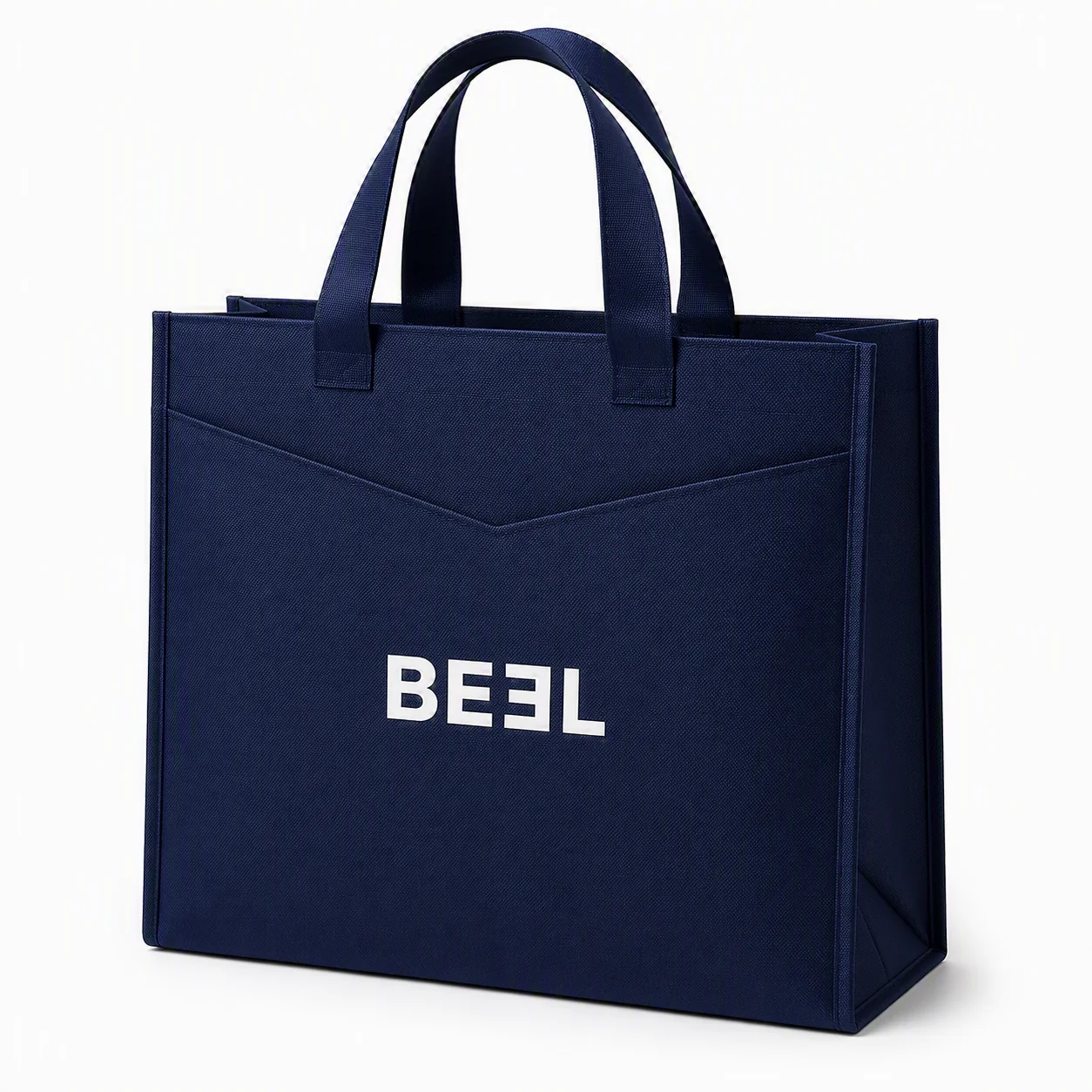
Government departments, public sector undertakings, state boards, municipal bodies, defence canteens, public hospitals and government schools are among the largest bulk buyers of bags in India. They buy non-woven carry bags for public health campaigns, conference and delegate bags for departmental events, joining kits for new recruits, school bags for state education schemes, and file and document bags by the tens of thousands.
Most private bag manufacturers never see this demand, because it does not arrive through enquiry forms. It arrives through the Government e-Marketplace (GeM) and through formal tenders. This guide explains how that channel actually works — for procurement officers sourcing bags, and for manufacturers deciding whether the channel is worth entering.
What GeM Is, and Why Bags Move Through It
The Government e-Marketplace is the central online procurement platform for Indian government buyers. Where a private company would email three suppliers for quotes, a government buyer is generally required to route the purchase through GeM, which creates an auditable trail of catalogue listings, bids and awards.
For a category like bags, this matters because the buying is genuinely high-volume and genuinely repetitive. A state health department running an awareness drive may need 50,000 printed non-woven bags. A public university hosting a convocation needs delegate bags. A PSU onboarding 800 trainees needs corporate joining kit bags with the organisation's branding. These are the same specifications a private buyer would order — the difference is entirely in the procurement mechanics.
How Government Buyers Actually Purchase Bags on GeM
There are three broad routes, and the order value decides which one applies.
Direct purchase. For low-value requirements, a buyer can order straight from a seller's catalogue listing without running a bid. The threshold is modest, so this covers small departmental orders rather than large campaigns.
Comparison and L1 selection. For mid-range values, the buyer compares available catalogue offerings and selects the lowest-priced compliant option.
Bid or reverse auction. Above a defined value, the buyer must publish a bid. Sellers submit against a specification, and for larger values a reverse auction may follow, where sellers compete downward on price in real time. This is where most meaningful bag contracts are decided.
The practical implication for a manufacturer is that catalogue presence alone is not a strategy. Volume sits in the bid layer, and bids reward suppliers who can read a specification precisely and price it without guessing.
What the Public Procurement Policy Gives Small Manufacturers
India's Public Procurement Policy for Micro and Small Enterprises is the single biggest reason a mid-sized manufacturer should take this channel seriously. The headline provisions, per the Ministry of MSME:
- A 25% mandatory share. Central government ministries, departments and CPSUs must source a minimum 25% of total annual procurement from Micro and Small Enterprises.
- Sub-targets within that 25%. Four per cent is earmarked for MSEs owned by SC/ST entrepreneurs and three per cent for women-owned MSEs. Shortfalls roll over to other MSEs.
- L1 price matching. An MSE quoting within L1 plus 15 per cent may revise its price down to match the lowest bidder and supply up to 25 per cent of the tender value. Where multiple MSEs qualify, the supply is shared proportionally; for non-divisible contracts, the full award can go to the qualifying MSE.
- Tender fee and EMD exemption. MSEs receive tender documents free of cost and are exempt from Earnest Money Deposit. Note carefully that this exemption does not extend to Performance Bank Guarantees or Security Deposits — a distinction that catches out first-time bidders.
- Reserved items. A list of 358 items is reserved for exclusive purchase from the MSE sector.
All of this is contingent on one document: a valid Udyam Registration. Without it, none of the above applies.
Registering as a Seller: What It Actually Requires
Seller registration is free and done online. In practice you will need a PAN, a Udyam Registration certificate, GST details, bank account details with KYC, and identity and address proof for the authorised signatory. Aadhaar verification via a mobile-linked OTP has become a common friction point — if the mobile number attached to the Aadhaar is out of date, registration stalls before it begins.
Two further items deserve attention. Vendor assessment may be required depending on the category and whether you are listing as an OEM. OEM authorisation has tightened: where a reseller lists another company's product, the authorisation letter is expected on company letterhead, naming the authorised signatory, specifying the product category scope, and carrying validity dates.
Manufacturers with genuine in-house production have a structural advantage here. A supplier who owns the factory can list as an OEM and avoid the entire authorisation chain. BEEL Bags has run its own Mumbai production floor since 1996, which is the same reason we can hold specification on a 50,000-unit run.
Rules on caution money and deposit slabs have changed more than once, and MSME exemptions have been applied and revised. Verify the current position directly on gem.gov.in before budgeting for it — do not rely on a secondary source, including this one.
Reading a Bag Tender Specification Properly
Government bag specifications are written tightly, and most bid failures are specification failures rather than pricing failures. The variables that recur:
GSM. Non-woven tenders almost always specify a minimum GSM. A 90 GSM box-bottom bag and a 60 GSM flat bag are different products with different load ratings, and substituting downward to win on price is the fastest route to rejection at inspection. Our non-woven bags manufacturing guide covers the GSM bands in detail, and wholesale price ranges by GSM separately.
Material compliance. Where a tender specifies jute, cotton or canvas for sustainability reasons, the material is usually non-negotiable. The trade-offs between these are set out in our comparison of non-woven, jute and canvas bags, and in the wider eco-friendly bags buyer's guide.
Print method and colour count. Screen print, heat transfer and offset each have different setup costs and different tolerances. A spec that names Pantone references needs a supplier who can hold them.
Dimensions and handle type. Stated in millimetres, and inspected. Handle anchoring is the most common point of physical failure in bulk government orders.
Delivery schedule and penalty clauses. Phased delivery across multiple districts is routine in government contracts, and liquidated damages for delay are standard. Price the logistics, not just the bag.
Which Bag Categories See the Most Government Demand
Across departments, a few categories recur consistently:
- Non-woven promotional and campaign bags — public health, sanitation and awareness drives, usually at very high volume and tight unit cost.
- Conference and delegate bags — departmental seminars and training programmes. See our guides to custom event bags and exhibition and trade show bags.
- School bags — state education schemes and municipal school distributions, covered in our guide to customised bags for schools and colleges.
- Hospital and healthcare bags — public hospitals and health departments. See hospital tote bags in bulk and medical and pharmaceutical conference bags.
- File and document bags — a steady administrative requirement across offices. See document bags and office carry accessories.
- Laptop bags for IT departments and training programmes — see laptop bag wholesale.
- Pilgrimage and yatra kits for state tourism boards and temple trusts — see Char Dham and yatra kit bags.
Is the Channel Worth It for a Private Manufacturer?
Honestly assessed, government supply suits some manufacturers and not others. It rewards capacity, documentation discipline and patience with process. It punishes thin working capital, because payment terms follow inspection and acceptance rather than dispatch, and because Performance Bank Guarantees tie up funds even when EMD is waived.
A manufacturer already running large private bulk orders is generally well placed, since the production capability is identical and only the paperwork is new. A manufacturer whose typical order is 500 units will find the compliance overhead disproportionate.
The realistic path is to treat GeM as one channel among several rather than a replacement for direct B2B sales. Most established suppliers run both: corporate gifting and private bulk contracts for margin and speed, government supply for volume and continuity.
Frequently Asked Questions
Do I need Udyam Registration to sell bags to government buyers?
You can register and sell without it, but you forfeit the MSE benefits — the 25% reserved procurement share, L1+15% price matching, and tender fee and EMD exemption. For a small or micro manufacturer, that makes Udyam effectively essential rather than optional.
Are bags on the list of items reserved for exclusive MSE purchase?
A 358-item reservation list exists under the Public Procurement Policy. Whether a specific bag category falls within it should be confirmed against the current official list rather than assumed, as the schedule is revised periodically.
What is the minimum order quantity for a government bag contract?
This is set by the tender, not the supplier, and government bag requirements typically run far above private MOQs — often tens of thousands of units. Our standard commercial MOQ is 100 pieces; see how to order wholesale bags in India for private bulk orders.
How long do government bag orders take to produce?
The tender sets the delivery schedule, and phased district-wise delivery is common. Build inspection time and transit into the plan, not just production days.
Can a manufacturer bid without being an OEM?
Yes, as a reseller, but you will need a valid OEM authorisation letter meeting the current format requirements. In-house manufacturers avoid this entirely by listing as OEM.
Sourcing Bags in Bulk
BEEL Bags is a direct B2B bag manufacturer in Mumbai with in-house production since 1996, supplying non-woven, jute, canvas, laptop, file, school, medical and conference bags in bulk across India. Browse the full product range, use Design Your Bag to specify a custom requirement, or contact us for a bulk quote.
Related reading: the corporate bag procurement playbook for Mumbai offices and top bag manufacturers in Mumbai for bulk and corporate orders.