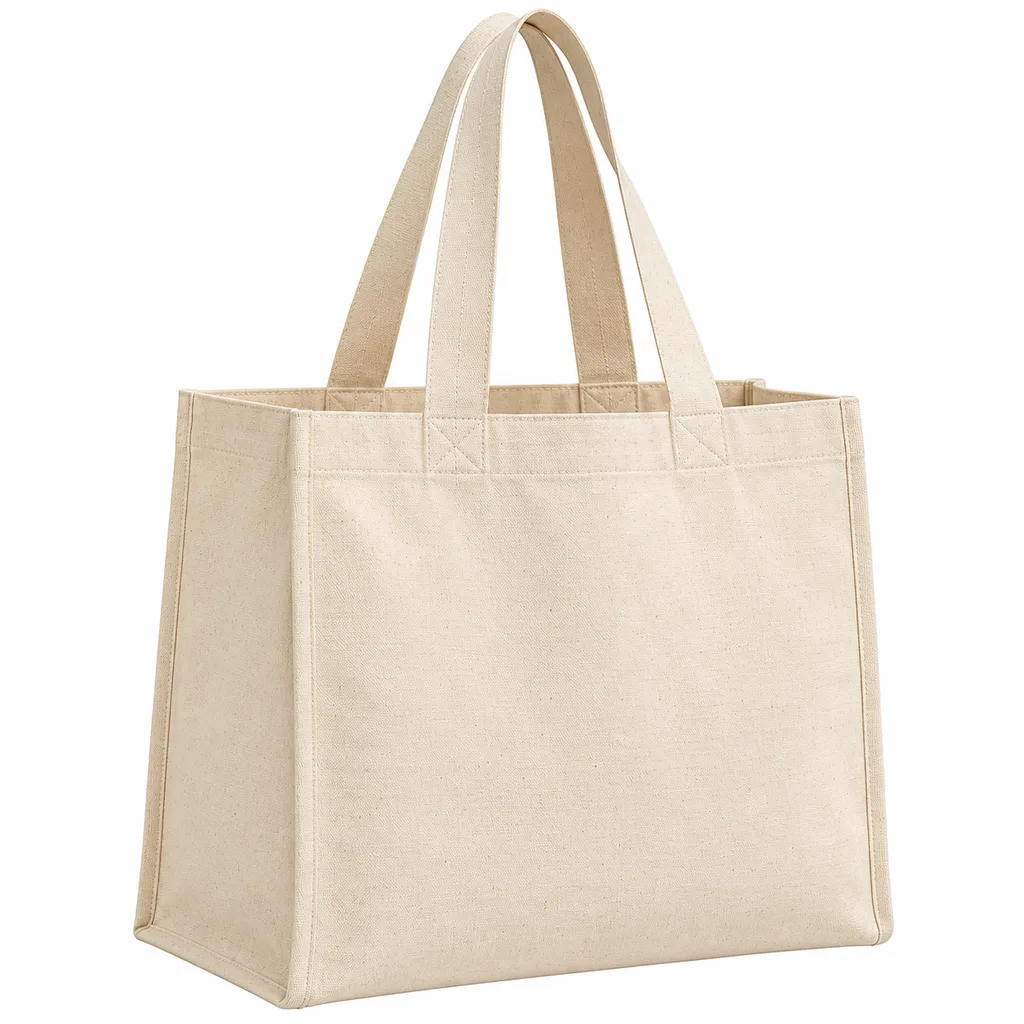
Most enquiries we get for cotton bags start with one line: "Send me your price for cotton bags." We can't answer that honestly without four more numbers. A 4 oz calico bag for a pharmacy counter and a 10 oz canvas tote for a bank's annual gift are both "cotton bags", and one costs five times the other.
The second problem is that a lot of buyers have been burned before. They ordered from a listing that said "100% cotton, heavy quality", and what arrived was thin, see-through fabric with handles that tore off after two grocery runs. Or the bags looked fine but shrank two inches the first time someone washed them.
This guide is what we tell buyers on the phone at our Govandi unit. It covers fabric weights, real price bands, printing, lead times and the checks you should run on any cotton bags manufacturer in India, including us. If you only want a number, the price table is in the third section.
What a cotton bags manufacturer actually makes
At our Mumbai bag factory, "cotton" covers three fabric families. Buyers often mix them up, and suppliers sometimes take advantage of that.
Calico (light, plain weave cotton)
Calico is the light, unbleached cotton you see on pharmacy and bookstore bags. It usually sits between 4 and 5 oz (roughly 130 to 170 GSM). It folds small, prints well with one or two colours and is the cheapest way to give someone a genuine cotton bag. It will not stand up on its own, and it is not meant to carry 8 kg of vegetables every day.
Cotton drill and twill (mid weight)
Drill is a twill weave, usually 6 to 7 oz. It has a diagonal texture, hides dirt better than calico and is our most common choice for retail shopping bags and event totes where the client wants something that feels "proper" without paying canvas prices.
Canvas (heavy cotton)
Canvas starts around 8 oz and goes up to 12 oz or more. It holds its shape, takes embroidery without puckering and survives years of use. We cover it in detail on our canvas bags page, and if you are deciding between the two, our post on canvas bag wholesale pricing in Mumbai goes deeper into heavy totes.
All three are 100% cotton. The difference is yarn count, weave and weight per square metre. When a supplier says "cotton bag" without naming the weight, ask for it.
Ounces and GSM: the conversion nobody explains
Cotton fabric in Indian markets is still sold in ounces (oz per square yard), while non-woven and paper buyers are used to GSM. One ounce per square yard is about 33.9 GSM. So a "6 oz" fabric is roughly 200 GSM. We give both numbers on every quote because buyers comparing a cotton bag with a non-woven bag need the same unit.
One caution. Grey (unbleached) fabric is weighed before processing. Bleaching and washing can take off 5 to 8% of the weight. If a supplier quotes "8 oz" and you get 7.4 oz finished fabric, that may be honest grey weight. Ask whether the weight is grey or finished, and get it written on the quote.
| Fabric weight | Approx GSM | Typical fabric | Best use | Comfortable load |
|---|---|---|---|---|
| 4 oz | 135 | Calico, plain weave | Pharmacy, bookstore, giveaway bags | 2 to 3 kg |
| 5 oz | 170 | Calico, sheeting | Retail carry bags, saree and garment packing | 3 to 5 kg |
| 6 oz | 200 | Drill, light twill | Event totes, boutique shopping bags | 5 to 7 kg |
| 8 oz | 270 | Light canvas | Grocery totes, corporate gifts | 8 to 10 kg |
| 10 oz | 340 | Canvas, duck | Premium gifting, structured totes with zip | 10 to 12 kg |
| 12 oz and above | 400+ | Heavy duck canvas | Tool bags, beach bags, heavy retail | 12 kg and above |
The load column assumes proper stitching and reinforced handles. A 10 oz bag with a single line of stitching on a 1 inch handle will still fail.
Cotton bag prices in India at bulk quantities
Here is the table buyers ask for. These are rough factory bands for 1,000 pieces with a one-colour, one-side screen print, ex-works Mumbai, before GST and freight. Cotton yarn prices move with the season and the cotton crop, so treat these as a starting point. Our bulk pricing page has the current ranges across all materials.
| Bag type | Size (W x H x gusset) | Fabric | Approx price per piece at 1,000 units |
|---|---|---|---|
| Flat calico bag, cotton tape handles | 12 x 14 in | 4 oz calico | Rs 28 to Rs 45 |
| Cotton drawstring pouch | 10 x 12 in | 4 to 5 oz | Rs 22 to Rs 40 |
| Shopping bag with gusset | 14 x 16 x 3 in | 5 to 6 oz | Rs 45 to Rs 75 |
| Event tote, long shoulder handles | 15 x 16 x 4 in | 6 oz drill | Rs 60 to Rs 95 |
| Grocery tote, box bottom | 15 x 16 x 5 in | 8 oz canvas | Rs 85 to Rs 140 |
| Premium zip tote, lined, inner pocket | 16 x 15 x 5 in | 10 oz canvas | Rs 160 to Rs 260 |
What pushes the price up
- Bleached white or dyed fabric. Natural (off-white) is cheapest. Bleached white adds roughly Rs 3 to Rs 8 a bag on mid-size totes. Dyed colours add more and need a fabric MOQ of their own.
- Extra print colours. Each screen colour adds a screen, a setup and another pass. On 1,000 bags, a second colour typically adds Rs 4 to Rs 7 per bag.
- Gussets and box bottoms. More fabric, more stitching time. A 4 inch gusset on a 14 x 16 bag uses about 25% more fabric than a flat bag.
- Zips, linings, pockets, snap buttons. Each is a separate operation on the floor.
- Small quantity. At 300 pieces, screen and setup cost is spread thin. Expect 20 to 35% more per piece than at 1,000.
Where buyers waste money
The most common mistake we see is a 10 oz canvas bag for a one-day event. Delegates take it home, use it once, and it sits in a cupboard. A 6 oz drill tote with a good print does the same job at less than half the cost. The reverse also happens: a retailer buys 4 oz calico for grocery bags to save Rs 30 a piece, and the handles tear in the first month.
Cotton vs jute vs non-woven vs canvas for your order
We make all four, so we have no reason to push one.
Choose cotton when the bag needs to be washable, soft, foldable and printable with fine detail. Cotton takes thin lines and small text better than jute bags, whose rough weave breaks up detail. It is also the only one of the four that people happily throw in a washing machine.
Choose non-woven when the bag is a short-life carry bag and price matters most. A 70 to 90 GSM non-woven bag costs a fraction of cotton. If you go this route, read our note on non-woven bag GSM rules in India first, since the 2021 plastic waste amendment set a 60 GSM minimum for non-woven carry bags.
Choose jute when you want a rustic, premium look and a stiff bag that stands up on a shelf. Choose heavy canvas when the bag is a gift meant to last. Our side-by-side post on non-woven vs jute vs canvas bags has the full comparison, and the eco-friendly bags buyer's guide covers how each one holds up on reuse.
A plain fact about cotton that sellers don't mention: it is not automatically the greenest choice. Cotton takes a lot of water to grow, so a cotton bag only beats a plastic one on environmental impact if it is reused many times.
Printing and branding on cotton
Cotton is the easiest fabric we print on. It absorbs ink, it lies flat on the screen table and it doesn't melt under a heat press.
Screen printing
Most of our cotton orders are screen printed, with water-based or plastisol inks. Water-based ink soaks into the fabric and feels soft. Plastisol sits on top, gives brighter colour on natural fabric and is slightly rubbery to the touch. For a white logo on a dark dyed bag, plastisol or a discharge process is usually needed. Details are on our screen printed bags page.
Embroidery
Embroidery works well on 6 oz and heavier. On 4 oz calico, dense stitching can pucker the fabric unless we back it with a stabiliser. A 3 x 3 inch logo with up to 8,000 stitches is a typical gifting spec. It costs more than printing but looks better on premium bags. See embroidered bags for examples.
Digital and heat transfer
For full-colour artwork, photos or gradients, direct-to-garment printing or heat transfer works. Both are slower and costlier per piece than screen printing, so they suit runs under 500 or designs with many colours.
Practical print limits we work with: maximum print area is usually about 2 inches smaller than the bag face on each side, since the screen frame and seams get in the way. Lines thinner than about 0.5 mm can fill in on calico. Send vector files (AI, PDF or CDR) and Pantone references. If you only have a JPEG logo, we can redraw it, but tell us early.
Construction details that decide how long a bag lasts
Two bags can use the same fabric and last six months or six years. The difference is in the details on the stitching floor, and most cheap suppliers cut corners here because buyers don't check.
- Stitch density. We run 10 to 12 stitches per inch on body seams. Fewer than 8 and seams open under load.
- Handle attachment. On anything 6 oz and above, handles should have a box-and-cross (X) stitch, not one straight line. On canvas grocery totes we also fold the top hem twice so the handle is stitched through four layers.
- Handle width and length. 1 inch is the minimum for comfort. 1.5 inches is better for grocery use. Hand-carry handles are usually 12 to 14 inches; shoulder handles are 22 to 26 inches.
- Seam finish. Raw edges inside a bag fray after a few washes. Overlock or a French seam keeps it clean. French seams cost more and look better on premium totes.
- Thread. Polyester-core thread is stronger than pure cotton thread and doesn't rot when the bag stays damp.
Shrinkage and the natural speckles
Unwashed cotton shrinks roughly 3 to 5% the first time it is washed. On a 16 inch bag that is up to 0.8 inches. For most promotional bags this doesn't matter. For bags with a zip or lining, it does, because the outer and lining can shrink differently and the bag twists. On those orders we suggest pre-shrunk fabric, which adds a few days and a few rupees.
Natural cotton also has small brown specks. These are bits of seed and leaf left from ginning, and they are normal in unbleached fabric. Buyers seeing them on a first sample sometimes think the bag is dirty. If you want a clean, even look, ask for bleached or dyed fabric.
MOQ, lead times and what slows an order down
Our standard MOQ for cotton bags is 100 pieces for plain and printed runs. Below about 300, the per-piece cost jumps because of print setup. Dyed colours depend on fabric availability: if the shade isn't in stock, the mill may want 500 to 1,000 metres dyed, which works out to roughly 1,500 to 3,000 medium totes. Our MOQ page lists the figures for every product line.
| Order | Sample | Production after approval | Notes |
|---|---|---|---|
| 500 to 1,000 natural calico, 1-colour print | 3 to 5 days | 10 to 14 days | Fastest; fabric usually in stock |
| 1,000 to 3,000 drill or canvas totes | 4 to 6 days | 15 to 20 days | Gusset and handle stitching add time |
| 5,000+ pieces | 5 to 7 days | 20 to 30 days | We can split dispatch in lots |
| Dyed fabric (non-stock shade) | After lab dip, 7 to 10 days | Add 7 to 12 days | Shade approval needed before dyeing |
| Embroidered or zip-lined premium totes | 5 to 7 days | 18 to 25 days | Slowest stitching operations |
What actually delays orders is rarely the factory floor. It is artwork going back and forth for a week, a purchase order stuck in approvals, or a buyer changing the bag size after the fabric is cut. If you have a hard event date, tell us the date rather than "urgent", and we will plan backward from it. Before Diwali and wedding season, most cotton bag units in Mumbai are full, so add a week to these numbers in September and October.
Who buys cotton bags from us, and what they usually order
Retailers, boutiques and grocery stores
Stores want a bag that customers reuse, which puts the brand back on the street every week. A 6 oz bag with a gusset is the common choice. Some stores sell the bag at Rs 50 to Rs 100 instead of giving it away, which covers its cost. Our bags for retail stores page has the formats we make most.
Saree, garment and jewellery sellers
"Cotton bags for saree packing" is one of the most searched phrases in this category, and it makes sense. Cotton breathes, so silk sarees stored in it don't sweat the way they do in plastic. Many of our saree covers are made in light cotton for exactly this reason, often with a small window or a printed shop name.
Event organisers and corporates
Conference delegates and marathon participants get cotton totes or drawstring bags. For sports events, a cotton drawstring bag at 5 oz is cheap and reused at the gym. For conferences and offsites, see our bags for events range. For festive and employee gifts, an 8 or 10 oz canvas tote fits well inside a corporate gift bag programme, and many clients use them as wedding return gift bags too.
Brands and export buyers
Overseas buyers in the UAE, UK, US and Europe order cotton totes with their own labels and packaging. We handle private label bags with woven labels, hang tags and individual polybags. Export MOQs are higher, usually 500 to 1,000 pieces, to make freight worthwhile. Our bag export page and the guide on importing bags from India cover documents and shipping. We ship across India as well, including regular dispatches for bag buyers in Bangalore and other metros.
Organic cotton, compliance and GST
Organic cotton claims
We supply organic cotton fabric on request for larger orders. If you plan to print "organic" on the bag or sell it abroad as organic, conventional fabric with a label won't do. Buyers of GOTS-certified textiles need a transaction certificate (TC) for each consignment, issued by the certification body, that traces the goods back through the supply chain. A TC alone also doesn't let you use the GOTS logo on your product; that has separate labelling rules. Ask your supplier upfront how they will get you a TC, and build the extra time into your schedule, because certifiers can take up to around 15 working days to issue one.
Plastic rules and cotton bags
Since 31 December 2022, plastic carry bags in India must be at least 120 microns thick under the Plastic Waste Management Amendment Rules, 2021. That rule pushed many shops toward fabric bags. Cotton bags are outside the plastic carry bag rules altogether, which is one reason retailers in states with tight enforcement switch to cotton or jute.
HSN code and GST
Cotton bags can fall under two HSN headings depending on what they are. Shopping bags and handbags of cotton generally go under 4202 22 20. Sacks and bags used for packing goods, of cotton, go under 6305 20. The GST rate differs between the two, and rates were revised in September 2025, so confirm the current rate and classification with your CA before you raise purchase orders. We print the HSN code on every invoice so your accounts team can check it.
How to check any cotton bags manufacturer before you pay
There are thousands of listings for cotton bags on marketplaces. Many are traders who pass your order to whoever is cheapest that week. Here is how to tell the difference.
- Ask for a physical sample of the exact fabric weight, not a photo. Hold it to the light. 4 oz calico is semi-transparent; 8 oz canvas is not.
- Weigh it. A plain 14 x 16 inch bag in 6 oz fabric, with handles, should weigh roughly 60 to 75 grams. If yours weighs 40, the fabric is lighter than quoted.
- Pull the handles. Hold the bag body and pull the handle hard. Stitching should not crack or open.
- Ask where it is made. A manufacturer can tell you the address of the unit and will usually let you visit. You are welcome at ours; see our quality control process before you come.
- Get the spec in writing. Fabric weight (grey or finished), size, gusset, handle length and width, print colours, print size, packing. Then the bulk order can be checked against it.
Buyers often send us another supplier's bag and ask us to match the price. When we weigh these, a bag sold as "6 oz" sometimes turns out closer to 4.5 oz. We can match the price at that weight, but we say plainly what the buyer is getting, and most of them choose the heavier fabric once they see why their old bags kept tearing.
How to order cotton bags from us
- Share the basics. Send quantity, bag size or use, fabric preference (if any), print colours and your deadline on WhatsApp or through our contact page. A photo of a bag you like helps a lot.
- Get a quote. We usually reply within a working day with two or three options at different fabric weights, so you can see the trade-off.
- Sample. We make a printed or plain sample in 3 to 7 days. For Mumbai clients we can courier it the same day it is ready.
- Approval and advance. Once you approve the sample and artwork, we take an advance and book fabric.
- Production and inspection. Cutting, printing, stitching, then a check of handles, seams and print on every lot.
- Dispatch. Packed in cartons of 100 or 200 by default, or individually folded and polybagged if you need retail packing. We send through transport or courier anywhere in India, or by sea and air for exports.
Frequently asked questions
What is the minimum order for custom printed cotton bags?
100 pieces for most plain and printed cotton bags. Prices get noticeably better from 500 pieces and again at 1,000. Dyed fabric in a non-stock shade needs a larger quantity.
What is the price of a cotton bag in bulk?
At 1,000 pieces with a one-colour print, a small calico bag is roughly Rs 28 to Rs 45, a 6 oz shopping tote Rs 45 to Rs 95 and an 8 oz canvas grocery tote Rs 85 to Rs 140, before GST and freight.
Which GSM is best for a cotton shopping bag?
For everyday shopping, 6 oz (about 200 GSM) is the sweet spot. For heavy grocery use, go to 8 oz (about 270 GSM). 4 oz calico suits light items and giveaways.
Do cotton bags shrink after washing?
Yes, unwashed cotton shrinks about 3 to 5% on the first wash. For lined or zipped bags we recommend pre-shrunk fabric so the bag keeps its shape.
Is cotton better than canvas?
Canvas is cotton, just heavier and tighter woven. Light cotton is cheaper and folds small. Canvas lasts longer and looks more premium. Choose by how the bag will be used.
How long does a bulk cotton bag order take?
About 10 to 14 days after sample approval for 1,000 natural calico bags, and 15 to 20 days for drill or canvas totes. Dyed fabric or embroidery adds a week or more.
Can you supply organic cotton bags?
Yes, on request for larger orders. If you need a GOTS transaction certificate for resale or export, tell us at the quote stage so we can plan the fabric source and timeline.
If you have a quantity and a rough idea of the bag, that's enough to start. Send it to us through our contact page or on WhatsApp at +91 86525 70502, and we'll come back with options at two or three fabric weights, a sample timeline and a price you can take to your team. You can also browse our cotton bags range first.