Every year, a few weeks before Diwali, our phone starts ringing with the same kind of call. Someone needs a few thousand branded bags, the gift list is final, the distribution date is fixed, and the date cannot move because the festival will not move. The buyer usually has a rough idea of the bag and very little idea of what it takes to make that many in the time left.
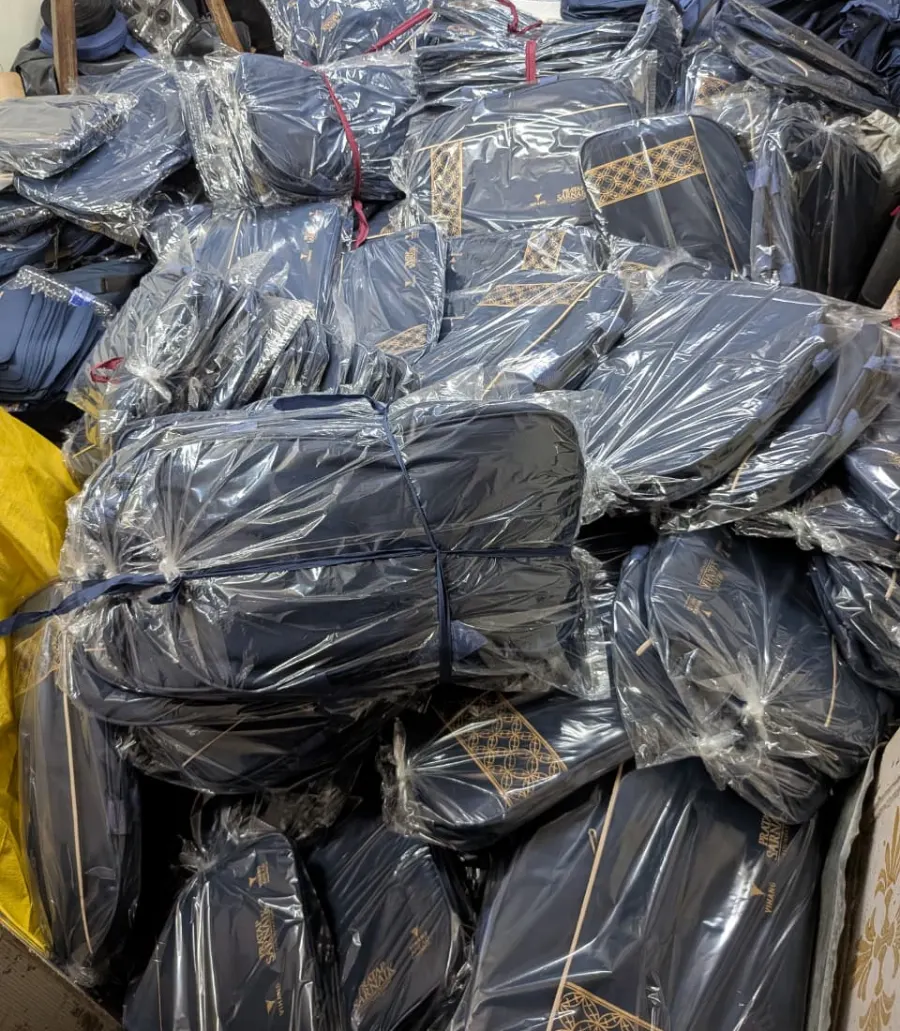
One of those calls came from the Pratap Sarnaik Foundation. The Foundation is linked to Pratap Sarnaik, the MLA from Ovala-Majiwada in Thane and Maharashtra's Transport Minister, and it wanted a duffle bag to gift to people in the constituency for Diwali. The quantity was 10,000 bags. We had 15 days from the go-ahead to the last carton leaving our floor.
We delivered on time. This post explains how, because the way that order ran is the most useful thing we can share with anyone planning festive gifting, a political or community distribution, or any large order with a hard date. We cover the spec we chose and why, how the 15 days were split, where the time really goes, what we checked, and what you should settle before you call any factory, including ours.
The order at a glance
We make bags at our Mumbai bag factory in Govandi, where our family has been in the trade since 1996. Most of our year is corporate gifting, events, retail and export work. A 10,000-piece duffle job with a festival deadline is not routine for anyone, so the first thing we did was write the job down on one page. The table below is close to that page.
| Item | What was agreed |
|---|---|
| Client | Pratap Sarnaik Foundation, Thane |
| Purpose | Diwali gift for people in the Ovala-Majiwada constituency |
| Quantity | 10,000 duffle bags |
| Time allowed | 15 days from go-ahead to final dispatch |
| Bag style | Medium overnight duffle with a rounded top, front zip pocket and main zip |
| Fabric | 600D polyester in navy blue |
| Handles | Nylon webbing grab handles plus a webbing shoulder strap |
| Trim | Light contrast piping along the front pocket |
| Branding | Screen print in a gold tone: Pratap Sarnaik Foundation in the centre, with Vihang and Vihang Ahead marks on either side |
| Packing | Each bag wrapped, then strapped into bundles for dispatch |
Two details on that sheet did most of the work for us. The navy 600D polyester was a fabric we could get in quantity at short notice, and screen printing three logos in one colour is fast once the screens are made. If the client had asked for embroidery on all three marks, or a custom-dyed body colour, the same order would not have fit inside 15 days. More on that below.
Why a duffle made sense as a Diwali gift
For a community or constituency gift, the bag has to be useful to almost everyone who receives it. A laptop bag means nothing to a household without a laptop. A tote is cheap but forgettable. A duffle gets used for a trip to the native village, a hospital stay, a weekend away, a gym bag, or storage under the bed. People keep it, and they carry it in public, which is the whole point of putting a name on it.
There is also the cost side. A medium duffle in 600D polyester costs more than a tote but far less than a backpack with padding and multiple compartments. For a gift going to thousands of families, that middle ground matters. If you are comparing gift options for your own festive list, our guide to Diwali gifting bags in bulk sets out the other choices, and our festival gift hampers page shows how a bag can carry other items too.
The bag in the photo is the actual bag from this order. You can see the rounded top, the piping line above the front pocket, the long shoulder strap and the three marks printed low on the front panel. We put the print low on purpose. On a duffle the top half creases where the handles pull, and a print placed there cracks and looks tired within months. The lower front panel stays flat when the bag is full and when it is carried.
Choosing the fabric: why 600D and not heavier
When buyers hear "duffle", many of them assume they need the heaviest fabric we stock. For a tour operator sending bags through airline baggage handling every week, that is right. For a gift bag that will mostly be used for a few trips a year, it is money spent in the wrong place. The table compares the fabrics we considered for this job.
| Fabric | What it is good for | Weak point | Fit for this order |
|---|---|---|---|
| 600D polyester | Gift and event duffles, light travel | Corners scuff sooner under heavy use | Chosen: right weight for a gift, easy to source in bulk, prints cleanly |
| 900D polyester or Oxford | Sports duffles, academies | Costs more and is stiffer to stitch at speed | Possible, but added cost without much benefit for a gift |
| 1200D nylon | Tour groups, airline handling | Highest cost, slower to source in one colour at volume | Overkill for this use and risky on lead time |
| Heavy canvas | Premium weekenders | Heavier, takes time to dry, harder to source in navy at short notice | Not suitable for the timeline |
Navy was the other half of the decision. Dark navy hides marks from daily use, looks right next to a gold print, and is a colour that fabric suppliers in Mumbai keep in stock in large rolls. That last point is the one buyers rarely think about. If your bag needs a body colour the mills have to dye for you, add days before the first cut. On a 15-day job those days simply do not exist. Our polyester bags page lists the shades we can usually get quickly.
We still checked every incoming roll. Fabric bought in a hurry is where shade variation creeps in, and 10,000 bags from two slightly different navy lots will look odd when they are handed out side by side at the same event. We matched rolls against the approved sample under daylight before they went to the cutting table, and kept lots together so that any small difference stayed within one batch.
How the 15 days were split
The simple maths is about 670 bags a day for 15 days. That number is misleading, because nothing gets stitched on day one. Material has to arrive, a sample has to be signed off, screens have to be made and the first cuts have to be checked. In practice the stitching lines had fewer than 15 days, so the daily output on the floor had to run well above that average once it started. This is how the time was laid out.
| Stage | Days | What happened |
|---|---|---|
| Spec lock and sample | 1 to 2 | Final size, fabric, handle and print position agreed; sample made and approved |
| Material purchase | 1 to 3, overlapping | Fabric, zips, webbing, piping and sliders ordered the same day the spec was locked |
| Screens and print trials | 2 to 3 | Screens made for the three marks; test prints checked for colour and placement |
| Cutting and printing | 3 to 12, in batches | Front panels cut and printed first, so printed panels were always ready for the stitching lines |
| Stitching | 4 to 14 | Bags assembled in batches, each batch checked before the next was released |
| Checking and packing | 5 to 15, rolling | Every bag checked, wrapped and bundled as it came off the line |
| Dispatch | Final days, in lots | Bundles sent out in lots so distribution could start before the last bag was made |
The overlap is the point. On a normal order, stages run one after another because there is time. On a rush order, everything that can run in parallel has to. Printing ran ahead of stitching, checking ran behind stitching on the same day, and dispatch started while production was still going. The client also helped by taking deliveries in lots instead of waiting for all 10,000 bags.
If you want the longer explanation of how a bag moves from roll to carton, our manufacturing process page walks through each step with photos from our own floor.
Where the time really goes
Buyers often assume stitching is the slow part. On a duffle it is the biggest single block of work, but the delays that sink rush orders usually happen before stitching starts. A logo file arrives as a blurry JPEG, and the screen cannot be made until someone finds the vector. The approval for the sample sits with one person who is travelling. The zip colour turns out to be out of stock in the quantity needed. Each of those can cost a day, and a 15-day job can absorb maybe one of them.
On this order the client side moved quickly. The artwork for all three marks came in a usable format, the sample was approved without a second round, and decisions came from one person. That is half the reason the date held. The other half was refusing to change the spec once production had started. A request to move the print or swap the strap halfway through a run sounds small. On 10,000 bags it can mean re-cutting panels or reworking finished pieces.
Printing three logos without slowing the line
The front panel carries three marks in one gold tone: the Pratap Sarnaik Foundation name in the centre, and the Vihang and Vihang Ahead marks on either side. We printed them with one screen per panel position, so a single pass put all three on the panel. One colour, one pass, panels printed flat before the bag was assembled. That combination is the fastest branding route we have for a job of this size.
Here is how the main branding methods compare on a duffle, and why screen printing won for this order. Our guide to logo printing on bags goes into each method in more depth.
| Method | Speed at 10,000 pieces | Look and durability | When we would choose it |
|---|---|---|---|
| Screen print, one colour | Fast once screens are made; printed flat before stitching | Clean, sharp, lasts well on polyester when cured properly | Large gifting and event runs with simple logos |
| Screen print, multi-colour | Slower; one screen and one pass per colour, plus drying between | Good, but registration has to be watched | When brand colours really matter |
| Embroidery | Much slower; machine time per piece adds up fast at this volume | Premium feel, very durable | Smaller premium runs, or a single small logo |
| Heat transfer or digital print | Moderate; each piece pressed one by one | Full colour possible, can peel if done badly | Photographic artwork or many colours on short runs |
The gold tone took a little care. A metallic-looking gold on navy can turn muddy if the ink layer is thin, and it can crack if it is laid on too thick. We ran test prints on spare panels, checked them after curing, and fixed the ink and the squeegee pressure before the run started. After that, the printing table checked panels against a reference print every batch. If you want a closer look at the process, see our screen-printed bags page. For buyers who do want stitched logos, the embroidered bags page explains where embroidery is worth the extra time.
People, machines and keeping the line moving
Our own workshop in Govandi runs 20 machines with a team of 65. For high-volume work we also have partner workshops with another 50 machines, and when part of a run goes to a partner unit, we tell the client in advance and stay their single point of contact. Our high-volume bag manufacturing page explains how we plan capacity for jobs much bigger than this one.
Machines are only part of it. On a duffle, the work splits naturally into stations: attaching the front pocket and piping, setting the zips, fixing the handles and strap loops, closing the side panels, and turning and finishing the bag. When each station does one job all day, the speed goes up and the mistakes go down, because nobody is switching between tasks. The risk is that a slow station holds up the whole line, so a supervisor watched the piles between stations and moved hands to wherever bags were building up.
Handles deserve their own mention. On any duffle, the handle joint takes the full weight of the bag. We stitched the webbing handles through the body with a reinforced box stitch and checked that joint on every bag, because a gift bag that tears at the handle in the first week is worse than no gift. The shoulder strap hooks were checked for burrs that could cut the webbing over time.
Quality checks at speed
The fear with any rush order is that quality is what gets cut to save time. We handled that by building checks into the line instead of saving them for the end. A final check on 10,000 finished bags would have taken days and found problems too late to fix them cheaply. Checking in batches meant a fault in one batch was caught before the next one was made the same way. The table shows what was checked and where.
| Check | Where in the line | What we looked for |
|---|---|---|
| Fabric shade and weight | Incoming rolls | Match to the approved sample, no shade jump between lots, no weak coating |
| Cut panel size | Cutting table | Panels matching the pattern, so bags close square and zips sit straight |
| Print quality | Printing table, every batch | Position, sharpness, gold tone, curing (no smudge or lift when scratched) |
| Zip function | After zip setting and again at final check | Smooth run end to end, no gaps in the teeth, slider pulls fitted |
| Handle and strap joints | Final check, every bag | Box stitch complete, no skipped stitches, hooks free of burrs |
| Finish | Before wrapping | Loose threads trimmed, no chalk or oil marks, piping straight |
Any bag that failed went back to the station that caused it, not to a separate repair pile. That gave each station quick feedback and stopped the same mistake repeating for a whole shift. Our quality control page describes the checks we run on every order, rush or not.
Packing and dispatch for a distribution
A constituency distribution is not a warehouse delivery. The bags go to several points, often handed out by volunteers, sometimes over several days. So packing had to suit the people at the other end. Each bag was wrapped individually to keep it clean, then the bags were strapped into bundles of a fixed count. A fixed count per bundle makes life easy for whoever is handing them out, because they can count bundles instead of bags.
Dispatch started in lots before production finished. That let the Foundation begin planning and moving stock early, and it took pressure off our floor space, since 10,000 finished duffles take up a lot of room. If your own distribution runs from several locations, tell your supplier at the quotation stage. Bundle size, labelling and the order of dispatch can all be planned around your route.
What a rush order like this does to lead time and price
Fifteen days for 10,000 duffles was possible because the spec was simple, the materials were in the market and the client made decisions fast. Change any of those and the time stretches. The table gives rough production times we work with for a duffle of this type after sample approval. Treat it as a planning guide, not a promise, because the real figure depends on your exact bag.
| Quantity | Normal schedule | Fastest realistic schedule | What makes the fast option possible |
|---|---|---|---|
| 500 to 1,000 | 10 to 15 days | 5 to 7 days | Stock fabric colour, one-colour print |
| 1,000 to 3,000 | 15 to 20 days | 8 to 10 days | Stock materials, quick sample approval |
| 3,000 to 5,000 | 20 to 30 days | 10 to 12 days | Simple spec, dispatch in lots |
| 10,000 | 30 to 45 days | About 15 days, as on this order | All of the above plus one decision-maker and no mid-run changes |
On price, a rush order does not always cost more per bag. What costs more is the things a rush can force: buying fabric from whoever has it in stock instead of the best-priced mill, extra shifts, or splitting dispatch into more lots. On a simple spec at volume, those extras are usually small. For rough budgeting on duffles, here is what we generally see before GST and freight, with a one-colour logo.
| Duffle type | 500 to 999 pieces | 1,000 to 4,999 pieces | 5,000 pieces and up |
|---|---|---|---|
| 600D polyester gift duffle, medium | Rs 300 to Rs 420 | Rs 270 to Rs 380 | Rs 250 to Rs 350 |
| 900D sports duffle with shoe pocket | Rs 350 to Rs 450 | Rs 330 to Rs 420 | Rs 310 to Rs 400 |
| 1200D nylon travel duffle, 50 litres | Rs 450 to Rs 580 | Rs 430 to Rs 550 | Rs 410 to Rs 520 |
These are ranges, not quotes. Size, zip grade, extra pockets and branding move the figure, so ask for a written price against your artwork. Our bulk pricing page carries the wider bands, and the minimum order quantity guide explains where each bag starts. For a deeper look at duffles for tours and groups, read our travel bags wholesale guide, or see the travel duffle and sports duffle product pages.
What to settle before you call a factory
Most of what made this order work was decided in the first two days. If you have a festive distribution, a political or community event, a pilgrimage group or a large corporate gift on a tight date, have these ready before you call anyone. It will save you more time than any factory can make up later.
- The final quantity, with a small buffer for damaged or extra bags at the distribution point.
- The hard date, and whether you can take bags in lots before it.
- Logo files in vector format (AI, PDF or SVG), for every mark that goes on the bag.
- A bag style chosen from something the factory already makes, rather than a new design.
- A body colour the factory can get from stock, confirmed before you fix the design.
- One person who can approve the sample the same day it is shown.
- Delivery addresses and how many bags go to each.
- Agreement that the spec does not change once cutting starts.
If the date is very tight, ask the supplier to show you the sample and the floor, on a video call if you can't visit. A supplier who can't show you machines running is probably passing your order to someone else. You are welcome to see our Govandi factory before you commit. Buyers working through government channels can also read our note on GeM portal bag supply, since public bodies often buy bags the same way.
How to order from us
Our process is the same for a 500-piece order and a 10,000-piece one. It just runs tighter on a rush job.
- Send us the bag type, size, quantity, logo and the date you need, on WhatsApp or through our contact page.
- We reply with a written quote, the materials we will use and a production plan with dispatch dates.
- We make a physical sample with your branding for approval.
- Once you sign off the sample and confirm the order, materials are bought and production starts.
- Bags are made and checked in batches against the approved sample.
- We pack to suit your distribution and dispatch in one lot or several, with a GST invoice.
If you want the general steps for any bulk bag purchase, our guide on ordering wholesale bags in India covers payment terms, samples and freight. For corporate buyers, the corporate gifting section shows the kits and bags we put together for staff and clients.
Frequently asked questions
Can you really make 10,000 duffle bags in 15 days?
We did it for the Pratap Sarnaik Foundation, with a simple spec, stock materials, a one-colour print and quick approvals. We won't promise the same timeline for every bag. We'll tell you in writing what is possible for yours before you place the order.
What is the minimum order for custom duffle bags?
Our duffles generally start at 100 pieces with a logo. Custom body colours need around 200 pieces, because the fabric has to be bought by the roll.
Which fabric is best for a gift duffle?
For most gifting, 600D polyester is enough. It prints well, costs less and holds up for occasional travel. Move to 900D or 1200D nylon if the bag will see heavy or frequent travel.
Is screen printing or embroidery better for a large order?
Screen printing is much faster at volume and looks sharp on polyester. Embroidery feels more premium but takes far more machine time, so it suits smaller runs or a single small logo.
Can you deliver to several distribution points?
Yes. Tell us the addresses and the count for each, and we will bundle and label the bags so they can be handed out without recounting.
Do you make other bags for festive or community distribution?
Yes. Besides duffles, we make tote, jute and non-woven bags, backpacks and pilgrimage kit bags for distributions and events. You can see who we've worked with on our clients page.
If you have a festive gifting list, an event or a community distribution coming up, send us the quantity, the bag you have in mind and your date. We will tell you honestly whether the date works and what it will take. Reach us through our contact page or on WhatsApp at +91 86525 70502.