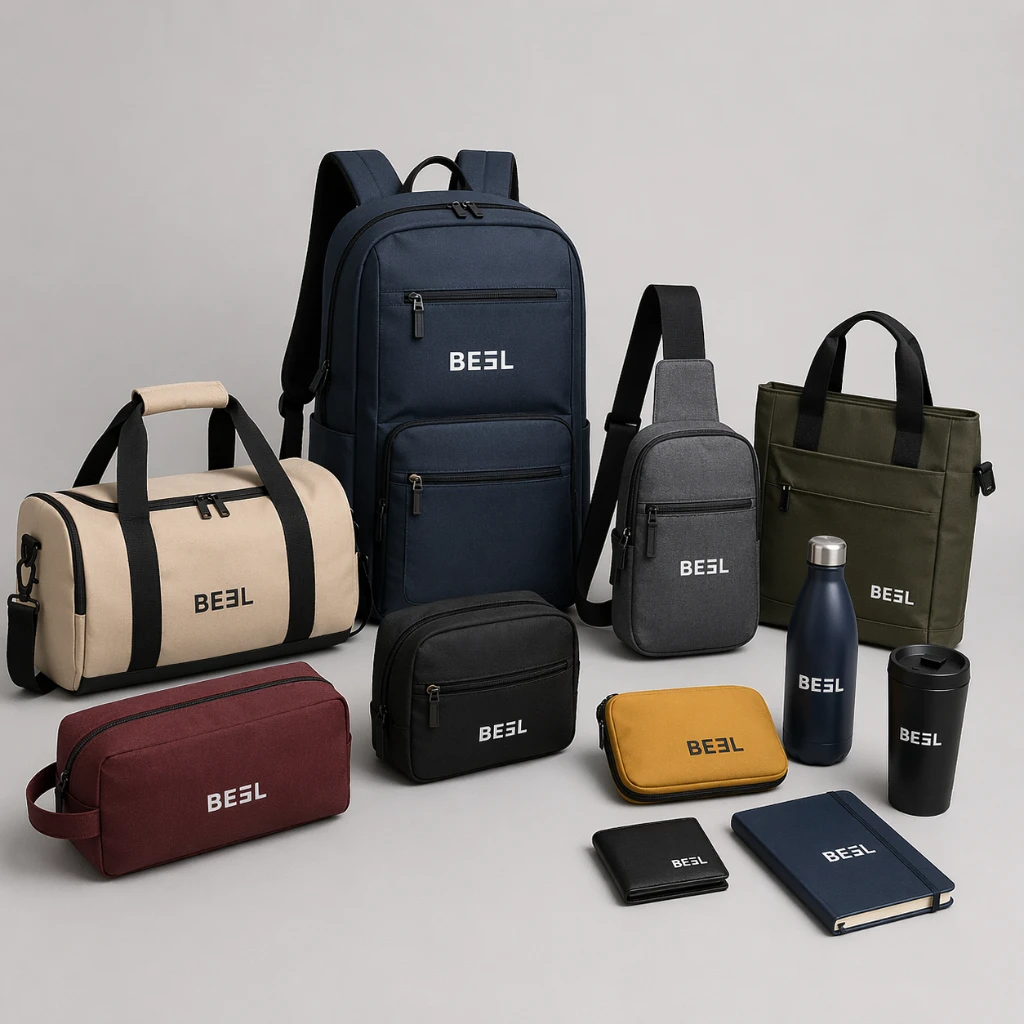
For most of the last decade, the default corporate onboarding kit brief was simple: pick a bag, print a logo, order 500 of them. That approach still works for volume hiring, but the brief HR teams are writing in 2026 looks different. Instead of one generic bag for every new hire, more companies are asking for fewer pieces, better materials, and packaging they can actually defend if someone asks "is this sustainable?" This guide covers what's changed, what a genuinely zero-waste onboarding kit looks like in practice, what it costs against a standard kit, and how to brief one without overspending on packaging that doesn't move the needle for new hires.
What Changed: From "More Swag" to "Better Swag"
The clearest shift in 2026 corporate gifting briefs, onboarding included, is a move away from volume-first thinking. Instead of a branded mug, a pen, a notebook and a tote bag handed out by the hundred, procurement and HR teams are increasingly specifying one or two well-made, reusable pieces, a durable bag, a genuinely useful accessory, over a pile of low-cost giveaways most of which end up in a drawer. The logic is straightforward: a new hire remembers one good bag longer than five forgettable trinkets, and the cost saved on quantity can be redirected into material quality.
This matters for how you brief the bag itself. A kit built around fewer, better pieces puts more scrutiny on the single bag you do choose, its material, its durability, and increasingly, whether it can be described honestly as sustainable. It also changes who signs off on the brief. Where a standard onboarding kit order used to sit entirely with HR or admin, a zero-waste kit increasingly gets a look from whoever owns the company's ESG or sustainability reporting, because the language on the bag and the wrap can end up quoted in an internal report or a LinkedIn post about the company's hiring practices.
What "Zero-Waste" Actually Means for an Onboarding Kit
"Zero-waste" gets used loosely in gifting briefs, so it's worth being precise about what a genuinely defensible version looks like:
- Reusable furoshiki-style wraps instead of disposable wrapping paper or plastic gift bags, a square of fabric (often the same fabric as the kit's carrier bag, or a coordinated cotton/canvas piece) used to wrap the kit's contents, which the new hire can then reuse as a scarf, a lunch wrap, or general-purpose cloth rather than throwing away.
- Compostable or minimal secondary packaging, no shrink wrap, no single-use plastic sleeves around individual items, no unnecessary branded tissue paper that gets unwrapped once and binned.
- A genuinely reusable primary bag, jute, cotton canvas, or heavier-GSM non-woven, chosen for actual multi-year use rather than as a one-time delivery vehicle for the other items.
- Honest material labelling, if the bag is non-woven polypropylene, describing it as "reusable, replacing single-use plastic" rather than "plastic-free" (see our related guide on eco-friendly bag materials compared if you're still deciding which fabric fits your sustainability claim).
None of this requires exotic materials or a large budget increase, it mostly requires choosing fewer, more deliberate components and being precise about the language used to describe them.
The Furoshiki Technique: A Quick Primer for Procurement Teams
Furoshiki is a centuries-old Japanese fabric-wrapping method, traditionally used to carry or wrap goods without any dedicated bag or box. For a corporate onboarding kit, the same principle scales down neatly: a single square of fabric, typically 60-90cm per side depending on what it needs to wrap, replaces both the gift box and the wrapping paper. The new hire unwraps it once, and instead of the fabric going in the bin like paper would, it becomes a genuinely useful object on its own, a scarf, a laptop cover, a produce bag, or simply a cloth they keep in a drawer and reach for later.
From a briefing standpoint, there are a few practical variants worth knowing:
- Matched-fabric wrap, cut from the same fabric roll as the kit's primary bag, which keeps the whole kit visually coherent and is usually the most cost-efficient option since it uses one fabric order instead of two.
- Contrast fabric wrap, a different but complementary fabric or colour, often used when the bag itself is a heavier, more structured material (like a laptop backpack) that wouldn't work as a soft wrap.
- Printed wrap with folding instructions, some companies print a small furoshiki folding guide directly onto the fabric or as an insert card, which increases the odds the new hire actually reuses it rather than not knowing what to do with a square of cloth.
Building the Kit: Fewer, Better Components
1. The Carrier Bag, the One Piece Worth Spending On
This is the component that gets kept and reused, so it's worth the largest share of the budget. Jute totes and canvas totes both hold up well to years of daily use and support a genuine reusability claim; heavier-GSM non-woven bags are a lower-cost option that still substantially outperforms single-use packaging, provided the sustainability language used matches the material honestly.
2. The Furoshiki Wrap
A coordinated fabric square, cotton, canvas offcuts, or even a printed jute-blend fabric, used to wrap the kit contents instead of paper or a plastic sleeve. This is a small-cost addition that does a disproportionate amount of work for the "we thought about this" impression, and it's genuinely reusable rather than decorative.
3. One or Two Genuinely Useful Items
Rather than five branded trinkets, one useful, well-made item, a good notebook, a steel water bottle, a desk organiser, reads as more considered than a pile of smaller giveaways, and costs less in aggregate once the packaging and quantity savings are accounted for. Pairing the bag with an item from an existing corporate gifting kit range keeps procurement simple, since it's one supplier relationship rather than three.
4. A Card or Insert Explaining the "Why"
A small printed card explaining that the kit was deliberately built around fewer, more durable pieces, and briefly noting the material and its end-of-life properties, turns a design decision into a visible piece of company culture. New hires who understand the reasoning are also more likely to actually reuse the furoshiki wrap instead of discarding it out of habit.
Budgeting: Fewer Pieces Doesn't Mean a Smaller Bag Order
A common misconception is that "fewer, better" gifting means a smaller bag order. In practice, the bag itself is usually still ordered at the same headcount-driven volume, what shrinks is the number of small accessory items bundled with it, and what changes is the material and finish quality of the bag and wrap. If your programme is shifting toward this model, expect your bag-line budget per kit to increase modestly (typically 15-30% depending on material upgrade) while your total accessory-line spend decreases, often netting close to budget-neutral overall.
| Kit Element | Standard Onboarding Kit | Zero-Waste / Furoshiki Kit |
|---|---|---|
| Carrier bag | Non-woven or basic canvas, mid-GSM | Jute, canvas, or heavier-GSM non-woven, upgraded finish |
| Wrapping | Printed paper or plastic sleeve, single-use | Fabric furoshiki wrap, reusable |
| Accessory items | 3-5 smaller giveaways (pen, mug, keychain, etc.) | 1-2 higher-quality items |
| Secondary packaging | Individual poly bags per item, shrink wrap | Minimal or none, bulk-packed for internal assembly |
| Typical net cost per kit | Baseline | Roughly comparable, often within 5-10% either way |
Cross-Selling Note: This Is a Companion to Your Existing Employee Joining Kit Programme
If your company already orders standard employee welcome kits at volume for regular hiring, a zero-waste/furoshiki tier doesn't need to replace that programme, it works well as a premium tier for leadership hires, remote/hybrid new joiners receiving kits at home, or as a pilot before a full programme refresh. Running both tiers from the same supplier keeps production and delivery simple, and the same corporate gifting relationship covers both. Many companies start by piloting the zero-waste tier for director-level and above hires, then expand it to the full new-hire population once the material spec and cost are proven out over a quarter or two.
Who This Approach Suits, and Who It Doesn't
A zero-waste, fewer-better onboarding kit tends to land well at companies where new-hire experience is closely tied to brand identity, professional services firms, design and technology companies, and any organisation that already publishes sustainability commitments and needs its internal practices to hold up against that messaging. It's a harder sell for very high-volume, cost-sensitive hiring (large-scale seasonal or frontline hiring, for instance), where a standard bulk-branded kit remains the more practical choice. Many companies end up running both: a standard kit for high-volume roles, and a zero-waste tier reserved for corporate/office hires or leadership onboarding.
What to Ask Your Bag Supplier Before Briefing This
- Can the carrier bag and furoshiki wrap be produced in coordinated fabric/colour? A matched set reads as more deliberate than two unrelated pieces.
- What's the actual GSM/material spec, in writing? Needed if this kit will be referenced in an ESG report or sustainability communication, vague "eco-friendly" language without a spec behind it is a real risk if challenged.
- Can secondary packaging be minimised or removed entirely for a bulk order? Many suppliers default to individual poly-bagging each kit component; ask for bulk-packed delivery instead if you're assembling and wrapping the kits yourselves.
- What's the MOQ and lead time for a smaller pilot batch? If you're testing this tier before a full rollout, ask specifically about a lower-volume pilot run rather than committing to full headcount immediately.
- Can the supplier document fibre source for the fabric used? If your sustainability report needs to cite whether jute or cotton is virgin or recycled-blend, confirm this is available before committing to volume.
- Is there a minimum print run for the "why we did this" insert card? Small print runs sometimes carry a disproportionate setup cost, worth checking early if you want a printed card rather than a simple insert slip.
A Practical Rollout Timeline
For companies moving from a standard kit to a zero-waste tier, a phased rollout tends to work better than a full switch on a fixed date. A typical sequence: confirm material and fabric spec with your supplier and request a physical sample set (usually 5-10 working days); run a small pilot batch, often 20-50 units, for one hiring cohort or one office location; gather informal feedback on whether new hires actually reuse the furoshiki wrap and whether the accessory selection lands well; then place the full-volume order once the spec is confirmed. Building in a pilot step also gives your ESG or sustainability team a chance to review the material documentation before it's referenced anywhere externally.
A Worked Example: Scaling a Zero-Waste Pilot at a Mumbai-Based Firm
To make the numbers concrete, consider a hypothetical mid-size professional services firm in Mumbai hiring around 40 new employees a quarter across offices in Mumbai, Pune and Bangalore. Under a standard onboarding programme, each new hire receives a non-woven backpack, a printed notebook, a plastic pen, a keychain and a mug, individually poly-bagged and boxed, a familiar setup, but one where a meaningful share of the smaller items go unused within the first month. Switching to a zero-waste tier for this cohort might look like: a heavier-GSM canvas or jute backpack as the single carrier item, a matched-fabric furoshiki wrap replacing the box and poly-bagging entirely, and one higher-quality accessory (a steel water bottle or a proper notebook) instead of four smaller ones. The firm pilots this with its Mumbai office first, a 40-unit batch, collects informal feedback after six weeks on whether new hires kept and reused the wrap, then rolls the same spec out to Pune and Bangalore the following quarter. This kind of staged, office-by-office rollout is common precisely because it lets a company validate the material choice and the "does anyone actually reuse the wrap" question before committing budget across the full hiring pipeline.
Common Mistakes Companies Make When Briefing This
- Treating "eco-friendly" as a single, interchangeable label. As covered above, jute and cotton are genuinely biodegradable while non-woven polypropylene is not, conflating the two in internal or external communication is the single most common and most easily avoidable mistake in this category.
- Under-briefing the furoshiki wrap as an afterthought. If the wrap isn't specified with real fabric and finish detail, suppliers will often default to a thin, low-quality offcut that reads as cheap rather than intentional, undermining the entire point of the exercise.
- Not telling the new hire why the kit looks different. Without the short insert card or a line in the onboarding email explaining the "fewer, better" reasoning, some new hires simply assume the company cut costs on their welcome gift, which is the opposite of the intended impression.
- Skipping the pilot stage. Committing to a full-headcount order before testing reuse behaviour and material feedback at a smaller scale is the most common reason companies end up dissatisfied with a first attempt at this format.
- Assuming lower volume means lower attention to lead time. A smaller pilot batch still needs the same sample-approval cycle as a full order, leaving too little lead time before a hiring cohort's start date is a frequent, avoidable scheduling error.
How This Fits Into a Broader Corporate Sustainability Narrative
Onboarding kits are a small line item in most corporate budgets, but they're disproportionately visible, new hires photograph them, post about them, and form early impressions of company culture from them. A zero-waste onboarding tier is rarely, on its own, a material driver of a company's overall sustainability metrics. What it does well is give HR and sustainability teams a genuinely defensible, documented example to point to internally and externally, rather than a vague "we care about the environment" claim with nothing behind it. Pairing the kit rollout with simple, honest internal communication, what changed, why, and what the material actually is, tends to land better than treating it purely as a marketing exercise.
Why Work with BEEL Bags for a Zero-Waste Onboarding Kit
We manufacture jute, canvas, cotton and non-woven bags in-house at our Mumbai factory, and can produce a matched carrier bag and furoshiki-style wrap in coordinated fabric within a single production run. We provide material and GSM documentation on request for any order that needs to support a sustainability claim, and can advise honestly on which material fits a genuine zero-waste brief versus one that only sounds like it. Browse our employee welcome kits range, compare materials on our eco-friendly bags page, or get in touch via our contact page to brief a pilot batch.
Sourcing Notes: Working with a Mumbai-Based In-House Manufacturer
Where a zero-waste kit is manufactured matters almost as much as what it's made from. Working with a supplier that both dyes/weaves the fabric and stitches the finished bag in-house, rather than a trading company that sources components from several unrelated factories, tends to produce more consistent colour matching between the carrier bag and the furoshiki wrap, since both come off the same production floor. It also shortens the feedback loop when something in the sample needs adjusting: a change to stitching, handle length, or fabric weight can be turned around in days rather than routed through multiple middlemen. For companies based in or near Mumbai specifically, an in-house manufacturer also removes a layer of freight and handling time from the sampling cycle, which matters when a pilot batch is being tested against a specific hiring cohort's start date.
Measuring Whether the Pilot Actually Worked
Because the entire point of this format is genuine reuse rather than a one-time unboxing moment, it's worth deciding upfront how you'll actually measure that. A few lightweight options that don't require a formal survey: a short, optional feedback question in the new-hire's 30-day check-in ("did you keep and reuse the fabric wrap?"), an informal show-of-hands at a team all-hands a few months after a cohort's onboarding, or simply noting how many new hires bring the bag back to the office for daily use versus leaving it at home unused. None of this needs to be scientific. The goal is simply to confirm the material and format choice is landing before scaling the spec to a larger hiring population, and to catch early if the accessory selection or wrap size isn't quite right.
Frequently Asked Questions
What is a furoshiki-style wrap and why use one for onboarding kits?
Furoshiki is a traditional fabric-wrapping technique used instead of paper or plastic gift wrap. For onboarding kits, a coordinated fabric square wraps the kit contents and is fully reusable afterward, the new hire keeps it as a scarf, lunch wrap or general-purpose cloth rather than discarding packaging.
Is a zero-waste onboarding kit significantly more expensive than a standard kit?
Not necessarily overall. The carrier bag and wrap usually cost more per unit due to material upgrade, but total accessory-line spend typically drops since the kit contains fewer individual giveaway items, many companies find the net cost close to budget-neutral, typically within 5-10% of a standard kit.
Can BEEL Bags produce a matched carrier bag and furoshiki wrap in the same fabric?
Yes, since we manufacture both in-house, we can produce a coordinated bag-and-wrap set in matching or complementary fabric within a single production run.
What's the minimum order quantity for a pilot batch?
MOQs vary by material and customisation level, contact us with your target headcount for a pilot run and we'll confirm what's achievable at that volume and timeline. Many companies pilot with 20-50 units before committing to a full-headcount order.
Can this kit still include our standard branded accessories, like a notebook or bottle?
Yes, the model is "fewer, better" rather than "bag only." Most kits still include one or two well-chosen accessory items; the change is reducing the total item count and upgrading material quality rather than eliminating accessories entirely.
Does a zero-waste kit work for high-volume seasonal hiring, or only smaller office teams?
It's most practical for corporate/office hiring where a slightly higher per-kit budget is acceptable in exchange for a stronger brand impression. For very high-volume, cost-sensitive hiring, a standard bulk-branded kit usually remains more practical, many companies run both tiers side by side.
How do we document the material specification for our sustainability report?
We provide written GSM and fibre-source documentation on request with every bulk order, which your sustainability or ESG team can reference directly rather than relying on marketing language alone.