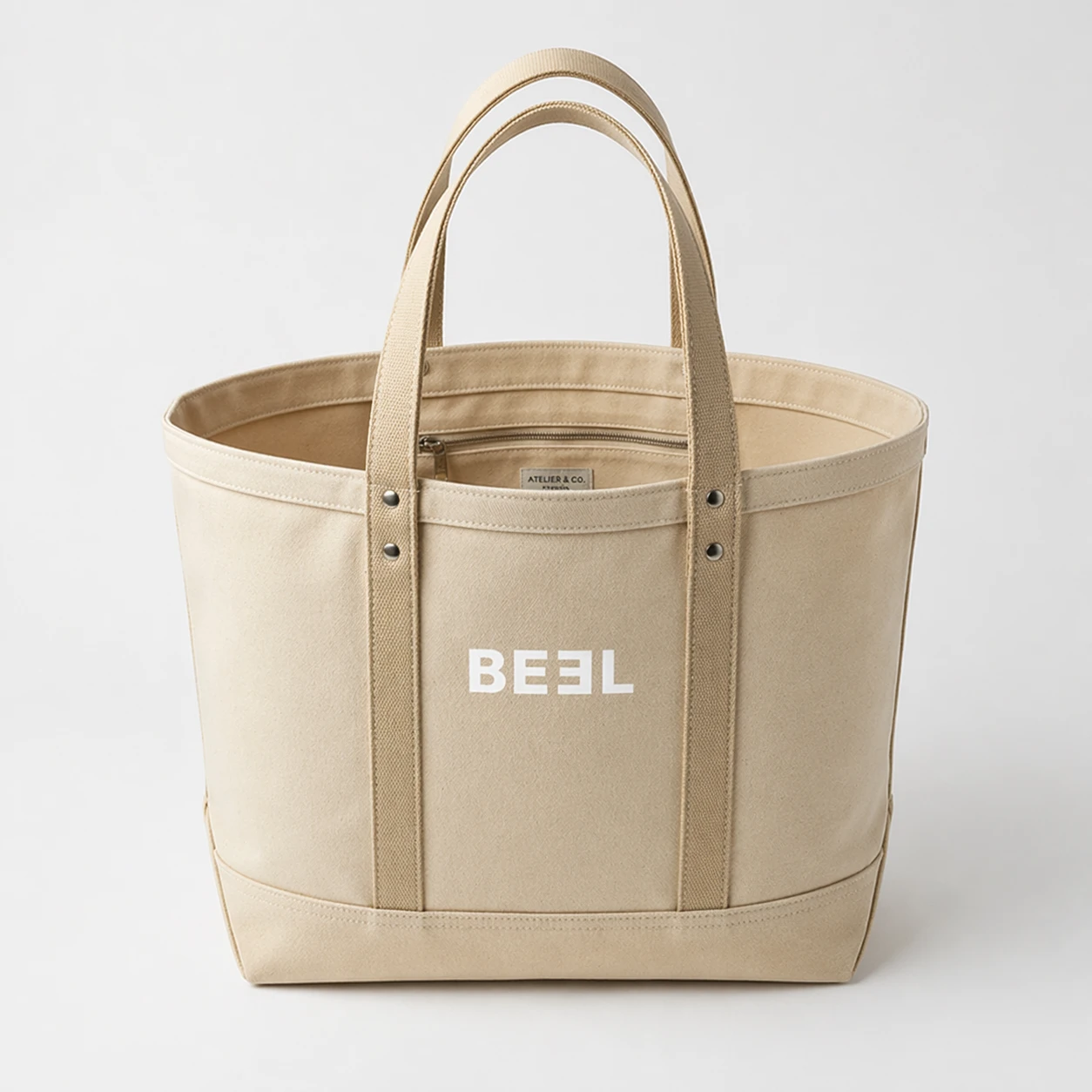
Buying in bulk? See our promotional bags, made at our Govandi, Mumbai factory with pan-India delivery.
In a world saturated with digital ads, physical promotional products remain highly effective for building brand recall. Branded bags are walking billboards that travel to offices, supermarkets, airports, and campuses. To stand out, companies need to move beyond generic designs. In this detailed guide, we share creative promotional bag ideas that boost brand visibility, drive customer engagement, and offer long term utility.
The Marketing Power of Branded Bags
A promotional bag is a highly functional item. Unlike pens or keychains that are easily lost, a bag is used to carry essential items. Every time a person carries your branded bag in public, they expose your logo to hundreds of onlookers. If the bag is designed beautifully, it becomes a preferred accessory, creating positive brand associations.
At BEEL Bags, we manufacture custom promotional carriers for corporate marketing campaigns. Explore our shopping bags collection and our utility bags collection to find inspiration for your next promotion.
Creative Promotional Bag Ideas
1. Reusable Cotton Canvas Totes with Inspirational Quotes
Instead of printing a giant company logo, print an inspiring quote, a cool graphic, or local artwork in the center, and place your logo discreetly at the bottom or on the back. People are far more likely to reuse an artistic bag than a bag that looks like a corporate ad. This strategy is highly popular with lifestyle brands and educational publishers.
2. Foldable Pocket Shopper Bags
These lightweight non woven or polyester bags fold into a tiny pouch that fits inside a pocket or handbag. They are incredibly useful for emergency grocery shopping, and users keep them on hand at all times. They offer a great combination of low unit cost and high utility. Learn more about our non woven options here.
3. Two Tone Jute Tote Bags
Add contrast by using dyed jute panels (like black, navy blue, or red) for the base and sides, and natural unbleached jute for the front and back. This design looks highly premium and stands out in a crowd. It is an excellent promotional gift for high value clients during festivals.
4. Branded Drawstring Sports Backpacks
Drawstring bags are popular with younger demographics. They are perfect for gym promotions, tech summits, college festivals, and sports events. You can use reflective print ink for the logo to add a safety feature for runners and cyclists, creating extra brand value. Check out our school and utility bags for drawstring styles.
Comparing Promotional Bag Styles
To help marketing managers choose the right promotional bag, we have compared the popular options below:
| Bag Style | Target Audience | Branding Space | Estimated Lifespan | Relative Cost |
|---|---|---|---|---|
| Canvas Quote Tote | Gen Z, Professionals, Creatives | Large | 1 to 3 years | Medium |
| Foldable Pocket Bag | General Public, Homemakers | Medium | 6 to 12 months | Lowest |
| Two Tone Jute Bag | Corporate Executives, Premium Clients | Large | 2 to 4 years | Higher |
| Drawstring Backpack | Students, Fitness Enthusiasts | Large | 1 to 2 years | Low |
Design Tips for Maximum Branding Impact
To ensure your promotional bags generate the best marketing results, keep these design principles in mind:
- Focus on Typography: Use modern, clean fonts for your messages. Avoid cluttered text layouts.
- Ensure Colour Contrast: Select print colours that contrast sharply with the bag fabric. For example, use white print on navy blue bags, or dark blue print on natural cream bags.
- Reinforce Key Stitching: A promotional bag that breaks under load harms your brand image. Ensure the handles are box stitched or cross stitched for durability.
- Add Useful Features: Consider adding small additions like an inner pocket for keys, a pen slot, or a bottle holder. These minor features significantly increase how often the bag is used.
Why Work with BEEL Bags for Your Promotional Campaigns
BEEL Bags helps brands execute successful marketing promotions. We provide:
- In house design and manufacturing to customize every detail
- A wide selection of fabrics, colours, and handle materials
- Crisp, durable screen printing that withstands regular washing
- Flexible minimum order quantities starting at 100 units for select styles
- Reliable bulk delivery timelines to sync with your campaign launch
Visit our contact page to connect with our marketing design team and request quotes for your custom designs.
Frequently Asked Questions
What is the minimum order quantity for custom promotional bags?
Our minimum order quantity for custom branded promotional bags is 500 units for non woven styles and 100 units for canvas or polyester bags.
Can you help us design the artwork for our bags?
Yes. If you have a logo, our design team can help you lay out the artwork, select fonts, and create digital mockups for your approval before printing.
Are water based eco inks available for printing?
Yes. We offer eco friendly screen printing options using water based, non toxic inks for cotton and canvas bags.
Request a Custom Promotional Bag Quote
Modern Screen Printing vs Digital Heat Transfer
Applying your company logo onto a promotional bag is a key manufacturing step. The choice of printing technology determines the cost, resolution, and durability of your branding.
Screen Printing
Screen printing is the traditional method for non-woven, cotton, canvas, and jute bags. It uses a stencil (screen) to apply layers of ink onto the fabric surface. It is highly cost-effective for large-scale bulk orders (exceeding 500 units) and produces bright, vibrant colors. For fabrics like jute or canvas, screen printing is the recommended method because the inks penetrate the thick fibers, ensuring the logo does not peel or fade over time.
Digital Heat Transfer
This process prints the design onto a special transfer paper and applies it to the bag using heat and pressure. It is excellent for multi-color logos with gradients or photographic elements. However, it is more expensive per unit and is best suited for premium polyester backpacks or laptop sleeves where detail is critical.
Step-by-Step Guide to Custom Bag Design Layouts
Designing a custom promotional bag requires careful attention to dimensions and print zones. Follow these steps:
- Define the Print Zone: Leave at least 2 inches of margin from the seams, handles, and zipper tracks. Printing too close to these areas can cause ink smearing and stitch issues during assembly.
- Select Contrasting Fabric Colors: Ensure high visibility by matching dark print inks with light fabrics (for example, navy blue ink on unbleached cream canvas) or light inks on dark fabrics (for example, white print on deep black non-woven material).
- Prepare High-Resolution Files: Share your corporate logo in vector formats (such as AI, EPS, or vector PDF) to ensure the print screens have clean, sharp edges.
Case Study: Brand Launch for a Tech Startup in Mumbai
A tech startup based in Andheri West, Mumbai, wanted to promote their new software platform at a major industry exhibition. They needed 2,000 promotional bags that attendees would keep and reuse. They chose a two-tone canvas tote bag with a minimalist print design showing local Mumbai landmarks alongside their website URL.
The campaign resulted in high visibility, with summit attendees carrying the bags across the venue. Social media tracking showed several photos of the bags shared on LinkedIn. The startup reported a 20 percent increase in website signups during the event, confirming the effectiveness of physical promotional items.
Practical Quality Inspection Procedures for Bulk Sourcing
Ensuring the quality of a bulk bag shipment requires a systematic inspection process. Whether you are buying canvas totes, polyester backpacks, or non-woven shopping carriers, use these standard quality tests before approving dispatch from the factory:
1. Seam Strength and Tensile Test
The durability of a bag depends on its seam construction. Choose random samples from the production line and load them with weight exceeding the rated carrying capacity by 50 percent (for example, load a 10 kg rated backpack with 15 kg of weight). Lift the bag by the straps and handles, shake it gently, and inspect the stitch points for any loose threads or fabric stretching.
2. Stitch Count Verification
Standard retail and corporate bags should have a stitch density of 6 to 8 stitches per inch. Lower stitch density (fewer than 4 stitches per inch) reduces the bag's tear resistance, causing seams to split open under load. Check that nylon binding tapes are stitched cleanly along all raw interior edges to prevent fraying.
3. Colorfastness and Rub Test
Promotional bags are often exposed to sweat, rain, and washing. Rub the printed logo area with a wet white cloth using moderate pressure. The ink should not transfer to the cloth. Check that the fabric color does not bleed when exposed to water, which is particularly important for dyed cotton, canvas, and jute bags.
4. Zipper and Puller Endurance Check
Open and close all zippers on the sample bag at least 20 times. The runner should move smoothly along the track without catching the inner lining fabric. The zipper teeth should stay aligned and not split open when pressure is applied to the side panels.
Supply Chain Optimization and Regional Logistics in India
India's vast geography requires choosing the right logistics mode to balance transport costs and delivery timelines. When shipping bulk bags from a manufacturing hub like Mumbai, consider these primary options:
1. Road Transport (LTL and FTL Cargo)
Road transport is the standard choice for domestic deliveries within India. For shipments under 2,000 kg, LTL (Less-than-Truckload) services through established networks (like TCI, V-Trans, or Gati) offer a balance of cost and speed. For larger orders, FTL (Full-Truckload) transport provides direct, faster delivery to your warehouse. Transit times from Mumbai to Pune are 1 day; to Ahmedabad or Bangalore, 2 to 3 days; and to Delhi or Chennai, 4 to 6 days.
2. Rail Cargo Networks
Rail transport is highly cost-effective for long-distance domestic shipments exceeding 1,000 km (for example, Mumbai to Kolkata or Guwahati). It is more eco-friendly than road transport and is less affected by weather conditions. However, it requires local transport to and from the railway stations, which must be planned in advance.
3. JNPT Port Export Clearance
For international export orders, Mumbai's Jawaharlal Nehru Port Trust (JNPT) is the primary gateway. Sourcing from a Mumbai-based factory simplifies JNPT shipping, as container loading, custom documentation, and port entry are handled locally. This reduces transit delays compared to inland factories that must transport cargo to sea ports via rail or road.
Cost Breakdown and Price Negotiation Strategies for Wholesale Buyers
Understanding how manufacturers structure their quotes helps buyers negotiate fair pricing and optimize order specifications. Bulk bag pricing is determined by four main factors:
1. Fabric and Raw Material Cost
This is the largest component, accounting for 50 to 70 percent of the unit price. Material cost is calculated by weight (GSM for non-woven, ounces for canvas, and fabric width for polyester). Sourcing during off-peak textile seasons or choosing standard stock colors helps lower raw material costs.
2. Stitching and Labor Charges
This covers the time required to cut, sew, and assemble the bag. Bags with complex pocket layouts, inner linings, padded compartments, and zippers require more stitching time and have higher labor charges. Simplifying the design reduces the cost per unit.
3. Printing and Setup Fees
Screen printing requires creating a stencil screen for each color in your logo. Setup fees are fixed, meaning they are spread thin over large quantities. Adding multiple print colors increases the setup and printing charge. Focus on single-color or dual-color logos to minimize printing costs.
4. Packaging and Freight Charges
Standard packaging involves packing bags in bulk cartons. Requesting individual plastic wraps or custom tags adds to the packaging labor and material cost. Shipping costs are calculated by volume and weight, so compressing and folding bags tightly before boxing lowers freight fees.