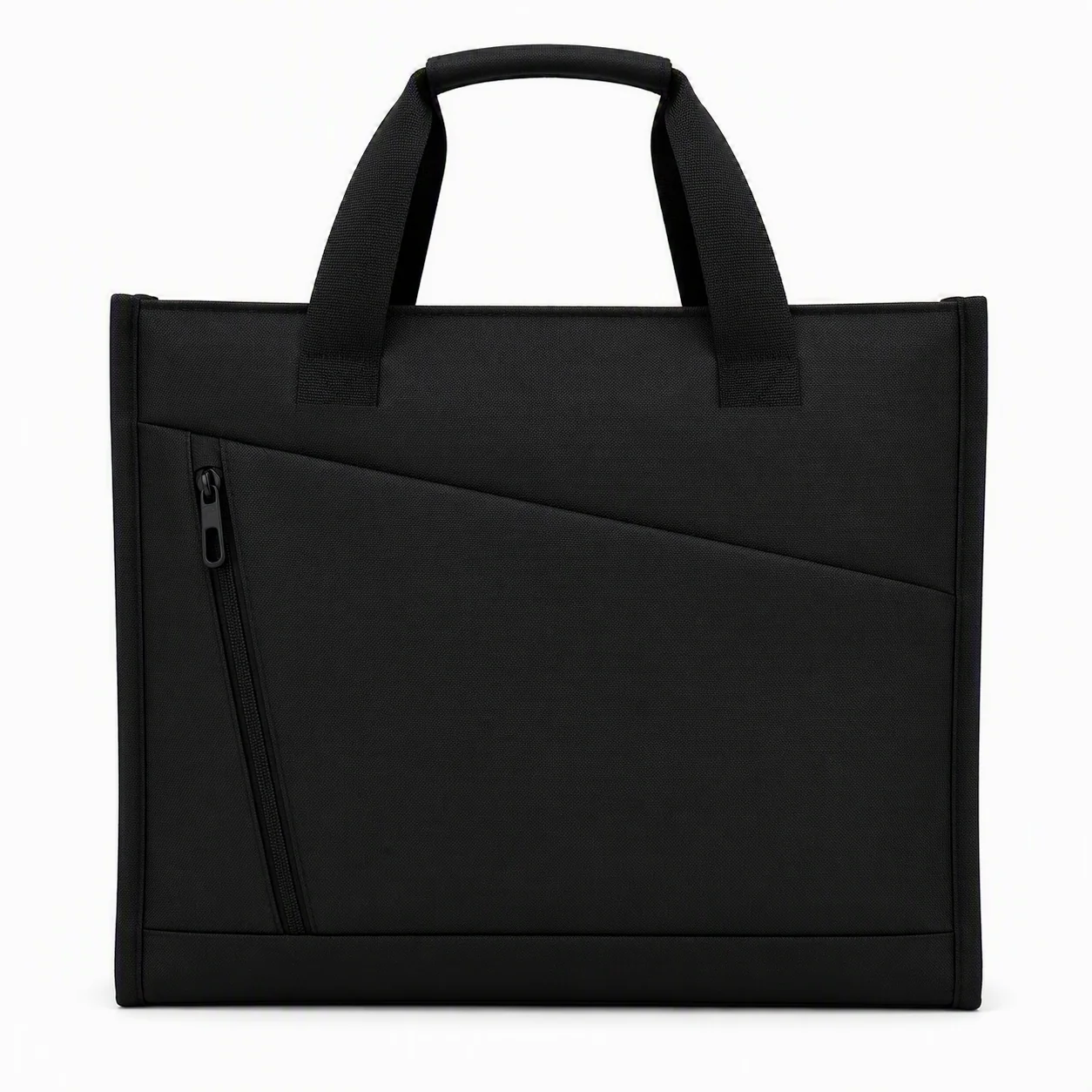
Buying in bulk? See our conference and delegate kits, made at our Govandi, Mumbai factory with pan-India delivery.
What is a delegate kit?
A delegate kit (also called a conference kit or delegation kit) is the pack handed to each attendee at registration for a conference, summit, seminar or trade show. It usually contains a branded delegate bag, the event programme or agenda, a notepad and pen, a name badge and lanyard, and any sponsor material or samples. Organisers use it to give every delegate what they need on the day and to keep the event and sponsor brands in front of attendees throughout the event. See our ready-to-brand conference kits.
An event or conference kit is the first physical touchpoint a delegate has with your brand or organisation. It sets the expectation for the entire event. Distributing a generic plastic folder with a cheap ballpoint pen creates a poor impression. In contrast, a carefully curated, highly functional conference kit shows that the organizers value the attendees and pay attention to detail. In this guide, we explore innovative ideas for conference kits and delegate packages that leave a lasting professional impression.
The Core Philosophy: Focus on Reusability and Quality
Modern professionals do not want junk. They value high utility items that they can use at their desks or in their daily lives. When planning your delegate package, prioritize quality over quantity. Choose two or three high-quality items rather than seven or eight cheap plastic ones. This approach is more sustainable and offers far better long-term brand visibility.
At BEEL Bags, we manufacture custom event packaging and kitting solutions at our Mumbai factory. Check out our corporate gifting bags to see what we can design for your upcoming event.
Top Theme Ideas for Delegate Kits
1. The Eco-Professional Kit
Perfect for sustainability summits, energy conferences, and modern corporate meetings. The entire package focuses on natural, organic, and biodegradable materials.
- The Bag: A natural Juco (jute and cotton blend) or heavy canvas tote bag with comfortable shoulder straps. Learn more on our shopping bags collection.
- Stationery: A recycled paper notebook and bamboo or seed paper pens that can be planted after use.
- Accessories: A reusable cork or bamboo coffee mug and a natural wood phone stand.
2. The Tech Executive Package
Ideal for software conferences, startup meets, and modern business events where delegates travel with multiple devices.
- The Bag: A premium polyester file bag or a slim laptop sleeve with multiple organiser compartments. Check out our file bags collection and our laptop bags collection.
- Stationery: A smart diary with an integrated power bank and a multi-port USB cable.
- Accessories: A sleek metal water bottle and branded webcam covers.
3. The Wellness and Hydration Package
Great for outdoor events, medical seminars, sports meets, and summer conferences.
- The Bag: A lightweight drawstring backpack or a sporty waist pouch. Explore our school and utility bags for options.
- Stationery: A pocket-sized spiral notepad and a touch-screen stylus pen.
- Accessories: A vacuum-insulated thermal bottle, hand sanitiser spray, and high-protection sunblock.
Comparing Delegate Kit Themes
To help event organisers select the right package type, we have compared the primary themes below:
| Kit Theme | Primary Target Audience | Key Benefit | Relative Budget |
|---|---|---|---|
| Eco-Professional | Corporate Managers, CSR Teams, NGOs | Strong green branding message | Medium |
| Tech Executive | IT Professionals, Startups, CXOs | Highest utility and desk presence | Higher |
| Wellness / Hydration | Students, Athletes, Health Workers | Lightweight and easy to distribute | Low |
How to Plan and Execute Your Conference Kit Order
To ensure a smooth delivery and packaging experience, keep these pointers in mind:
- Measure the Contents: Always size your bag based on the largest item in the kit. If you are distributing a thick binder, ensure the bag has a wide bottom gusset.
- Plan Your Logo Print: If using multiple sponsors, place the main event branding prominently on the front and sponsor logos neatly on the back of the bag.
- Allow Lead Time for Assembly: Assembling thousands of kits (inserting diaries, pens, and bottles into bags) takes time. Confirm if your bag manufacturer can handle the kitting and shipping to save you on-site hassle.
Why Partner with BEEL Bags for Your Conference Kits
BEEL Bags is a trusted vendor for corporate and event organisers. We offer:
- Custom bag manufacturing (canvas, jute, non-woven, polyester) to fit any kit theme
- High-quality screen printing and embroidery services
- Complete kitting and packaging assembly at our Mumbai facility
- Direct factory rates with transparent bulk discounts
- Reliable delivery coordination directly to your event venue
Visit our contact page to discuss your event requirements and request sample bags.
Frequently Asked Questions
What is the minimum order for custom conference kits?
Our minimum order quantity for custom branded event bags is 500 units for non-woven styles and 100 units for canvas or polyester bags.
Can you source the stationery and bottles for us?
Yes. For bulk orders, we can source co-branded diaries, bottles, and pens from our partner suppliers to deliver a fully assembled kit.
How quickly can you ship event kits outside Mumbai?
We deliver nationwide. Shipping times depend on the location, but typically range from 2 to 5 working days using express transport services.
Request a Conference Kit Quote
Step-by-Step Conference Kit Assembly and Logistics Plan
Managing the assembly and delivery of thousands of conference kits can be challenging for event planners. Follow this structured plan to ensure zero delays:
Step 1: Sizing and Verification (4 Weeks Before Event)
Gather all items that will go inside the delegate kit (notebooks, diaries, pens, folders, bottles). Measure the total volume and weight. Test these items with a sample bag to ensure they fit comfortably and do not cause the handles to tear.
Step 2: Artwork Approval and Printing (3 Weeks Before Event)
Confirm the final list of event sponsors. Design the printing layout, ensuring the host logo is prominent. Obtain sign-offs on the digital proofs before full printing begins.
Step 3: Assembly and Quality Control (2 Weeks Before Event)
Once the bags are stitched and printed, start the kitting process. Insert the stationery, bottles, and folders into each bag. Verify that each kit contains the correct items. Perform random quality audits on seam strength.
Step 4: Packaging and Shipping (1 Week Before Event)
Pack the assembled kits into heavy corrugated boxes. Label each box with the contents and quantity. Coordinate with the venue's logistics team to deliver the boxes directly to the registration desks or storage rooms.
The Environmental Impact of Reusable Conference Kits
Transitioning from single-use plastic folders to reusable bags significantly reduces the carbon footprint of your event:
- Waste Reduction: A reusable canvas or jute bag replaces plastic envelopes that are discarded immediately after the conference.
- Lower Resource Consumption: Producing one durable bag that is reused 100 times uses fewer resources than producing 100 single-use bags.
- Promoting Sustainability: Distributing eco-friendly kits shows that your organization is committed to environmental responsibility, encouraging attendees to adopt sustainable habits.
Case Study: Sustainable Delegate Kits for a Green Energy Summit
An international green energy summit held in Mumbai needed 3,000 delegate kits. The organizers wanted the kits to reflect the summit's environmental theme.
We designed a natural, unbleached cotton canvas tote bag with comfortable shoulder handles and a minimalist, water-based ink print. The kit included a recycled notebook and seed pens.
The event was a major success, with zero plastic packaging used. The delegates highly appreciated the quality of the canvas tote, and many were seen using the bags for daily office commutes after the summit.
Comparison of Event Kit Sourcing Options
To help planners make the best choice, we have compared the popular options:
Direct Factory Manufacturing
Buying directly from a manufacturer like BEEL Bags in Mumbai offers the lowest cost, custom sizing, and quality control, but requires a lead time of 2 to 3 weeks.
Wholesale Traders
Traders offer immediate stock of plain bags, but offer no custom branding or sizing options, and unit costs are higher due to middleman markups.
Practical Quality Inspection Procedures for Bulk Sourcing
Ensuring the quality of a bulk bag shipment requires a systematic inspection process. Whether you are buying canvas totes, polyester backpacks, or non-woven shopping carriers, use these standard quality tests before approving dispatch from the factory:
1. Seam Strength and Tensile Test
The durability of a bag depends on its seam construction. Choose random samples from the production line and load them with weight exceeding the rated carrying capacity by 50 percent (for example, load a 10 kg rated backpack with 15 kg of weight). Lift the bag by the straps and handles, shake it gently, and inspect the stitch points for any loose threads or fabric stretching.
2. Stitch Count Verification
Standard retail and corporate bags should have a stitch density of 6 to 8 stitches per inch. Lower stitch density (fewer than 4 stitches per inch) reduces the bag's tear resistance, causing seams to split open under load. Check that nylon binding tapes are stitched cleanly along all raw interior edges to prevent fraying.
3. Colorfastness and Rub Test
Promotional bags are often exposed to sweat, rain, and washing. Rub the printed logo area with a wet white cloth using moderate pressure. The ink should not transfer to the cloth. Check that the fabric color does not bleed when exposed to water, which is particularly important for dyed cotton, canvas, and jute bags.
4. Zipper and Puller Endurance Check
Open and close all zippers on the sample bag at least 20 times. The runner should move smoothly along the track without catching the inner lining fabric. The zipper teeth should stay aligned and not split open when pressure is applied to the side panels.
Supply Chain Optimization and Regional Logistics in India
India's vast geography requires choosing the right logistics mode to balance transport costs and delivery timelines. When shipping bulk bags from a manufacturing hub like Mumbai, consider these primary options:
1. Road Transport (LTL and FTL Cargo)
Road transport is the standard choice for domestic deliveries within India. For shipments under 2,000 kg, LTL (Less-than-Truckload) services through established networks (like TCI, V-Trans, or Gati) offer a balance of cost and speed. For larger orders, FTL (Full-Truckload) transport provides direct, faster delivery to your warehouse. Transit times from Mumbai to Pune are 1 day; to Ahmedabad or Bangalore, 2 to 3 days; and to Delhi or Chennai, 4 to 6 days.
2. Rail Cargo Networks
Rail transport is highly cost-effective for long-distance domestic shipments exceeding 1,000 km (for example, Mumbai to Kolkata or Guwahati). It is more eco-friendly than road transport and is less affected by weather conditions. However, it requires local transport to and from the railway stations, which must be planned in advance.
3. JNPT Port Export Clearance
For international export orders, Mumbai's Jawaharlal Nehru Port Trust (JNPT) is the primary gateway. Sourcing from a Mumbai-based factory simplifies JNPT shipping, as container loading, custom documentation, and port entry are handled locally. This reduces transit delays compared to inland factories that must transport cargo to sea ports via rail or road.
Cost Breakdown and Price Negotiation Strategies for Wholesale Buyers
Understanding how manufacturers structure their quotes helps buyers negotiate fair pricing and optimize order specifications. Bulk bag pricing is determined by four main factors:
1. Fabric and Raw Material Cost
This is the largest component, accounting for 50 to 70 percent of the unit price. Material cost is calculated by weight (GSM for non-woven, ounces for canvas, and fabric width for polyester). Sourcing during off-peak textile seasons or choosing standard stock colors helps lower raw material costs.
2. Stitching and Labor Charges
This covers the time required to cut, sew, and assemble the bag. Bags with complex pocket layouts, inner linings, padded compartments, and zippers require more stitching time and have higher labor charges. Simplifying the design reduces the cost per unit.
3. Printing and Setup Fees
Screen printing requires creating a stencil screen for each color in your logo. Setup fees are fixed, meaning they are spread thin over large quantities. Adding multiple print colors increases the setup and printing charge. Focus on single-color or dual-color logos to minimize printing costs.
4. Packaging and Freight Charges
Standard packaging involves packing bags in bulk cartons. Requesting individual plastic wraps or custom tags adds to the packaging labor and material cost. Shipping costs are calculated by volume and weight, so compressing and folding bags tightly before boxing lowers freight fees.