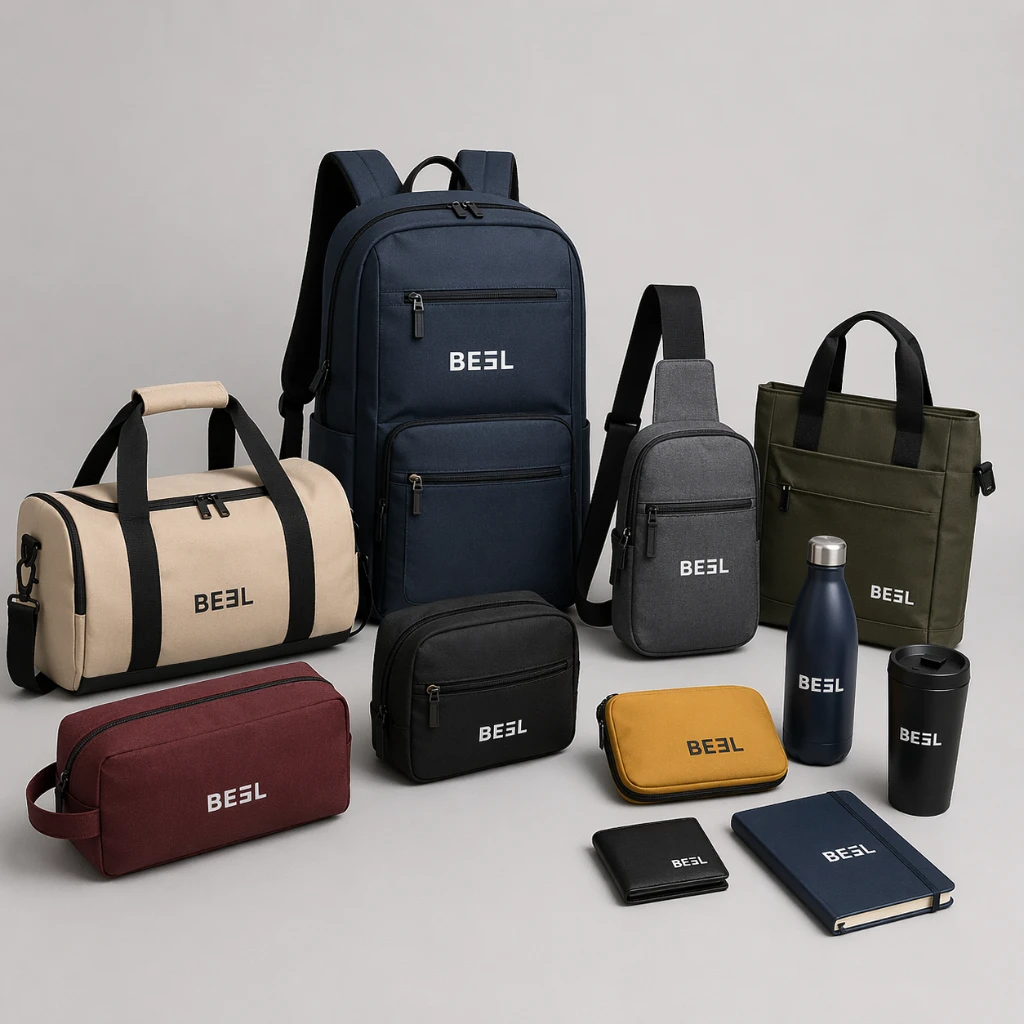
Buying in bulk? See our bulk pricing, made at our Govandi, Mumbai factory with pan-India delivery.
Whether you are a retail shop owner, a corporate procurement head, an NGO, or an export buyer, sourcing bags factory-direct from Indian manufacturers will save you 30 to 60 percent compared to buying through traders and wholesalers. This guide explains how factory-direct buying works, what to expect, and how to find the right manufacturer for your needs.
Factory-Direct vs Wholesale Trader: What Is the Difference?
| Factor | Factory Direct | Wholesale Trader |
|---|---|---|
| Price per unit | Lowest possible | 15 to 40% markup over factory price |
| Customisation | Full control: size, material, print, colour | Limited to stock designs |
| Minimum order | Typically 100 to 500 units per style | Often no minimum (but no customisation) |
| Quality control | Direct access to production line | No visibility into manufacturing |
| Lead time | 7 to 21 days for custom orders | Usually immediate stock availability |
| Branding/printing | Your logo, your design | Generic or trader's brand only |
For buyers who need customised bags with their own branding, factory-direct is almost always the right choice. For buyers who need very small quantities immediately, wholesale traders make sense for unprinted basics.
Types of Indian Bag Factories and What They Specialise In
Not all bag factories produce all bag types. Understanding the specialisations helps you find the right partner:
Non-Woven Bag Factories
These factories cut, stitch, and print non-woven polypropylene fabric bags. Typically found in Mumbai, Surat, Delhi, and Bangalore. MOQ: 500 to 1,000 units. Ideal for retail packaging, event bags, corporate gifting, and grocery bags. BEEL Bags produces non-woven bags in Mumbai.
Jute Bag Factories
Clustered in West Bengal (Kolkata, Howrah), where raw jute is grown. BEEL Bags sources and manufactures jute bag variants in Mumbai. Ideal for eco retail, premium gifting, and international export orders.
Canvas and Cotton Tote Bag Factories
Found in Tamil Nadu (Coimbatore, Tirupur), Gujarat, and Maharashtra. Specialise in screen-printed and embroidered cotton totes. See BEEL Bags cotton bag range.
Corporate Bag Factories
Produce laptop bags, document bags, conference bags, and travel kits in polyester, nylon, and canvas. Mumbai and Delhi are the major hubs. BEEL Bags corporate bag range.
Garment Cover Factories
Specialise in saree covers, suit covers, and garment bags for the textile industry. Primarily in Mumbai and Surat. See BEEL Bags garment cover range.
How to Evaluate a Factory Before Placing Your First Order
Not every factory that claims to manufacture bags actually does. Some are traders posing as manufacturers. Here is how to verify:
- Ask for factory photos and videos: A real factory can show you their production line, cutting tables, and printing setup
- Request GST certificate: Manufacturers have a GSTIN starting with their state code and including the letters MFR in their classification
- Check for IE Code: Required for export. Confirms they are registered exporters if claiming export capability
- Visit if possible: For large orders, a factory visit is strongly recommended
- Ask for client references: Request 2 to 3 references from buyers similar to your use case
Pricing Guide for Factory-Direct Bag Orders in India
| Bag Type | Material | 500 Units (per piece) | 2,000 Units (per piece) | 5,000+ Units (per piece) |
|---|---|---|---|---|
| Non-woven tote (loop handle) | 80 GSM | Rs. 28 to Rs. 45 | Rs. 20 to Rs. 35 | Rs. 15 to Rs. 28 |
| Canvas tote bag | 10 oz cotton | Rs. 120 to Rs. 200 | Rs. 90 to Rs. 150 | Rs. 70 to Rs. 120 |
| Jute tote bag | Natural jute | Rs. 160 to Rs. 280 | Rs. 120 to Rs. 200 | Rs. 90 to Rs. 160 |
| File/document bag | 600D polyester | Rs. 180 to Rs. 350 | Rs. 130 to Rs. 260 | Rs. 100 to Rs. 200 |
| Laptop bag (15.6 inch) | 600D or 1200D polyester | Rs. 550 to Rs. 900 | Rs. 400 to Rs. 700 | Rs. 320 to Rs. 550 |
All prices are ex-factory Mumbai, exclusive of GST and transport. Custom colours, multi-colour prints, and premium finishes will adjust the price accordingly.
The Order Process: What to Expect When Buying Factory-Direct
Phase 1: Enquiry and Quotation (Day 1 to 3)
Share your requirements (bag type, size, quantity, design) with the factory. A detailed quote is returned within 24 to 48 hours. Good factories ask clarifying questions about your use case so they can suggest the best material and construction.
Phase 2: Sample Production (Day 4 to 10)
A pre-production sample is made and sent for approval. Review the sample carefully: stitching at seams and handle points, print sharpness, fabric feel and weight, and overall construction quality.
Phase 3: Bulk Production (Day 11 to 25)
After sample approval and advance payment, bulk production begins. Standard lead times:
- 500 to 2,000 units: 7 to 14 working days
- 2,000 to 10,000 units: 14 to 21 working days
- 10,000+ units: 21 to 35 working days
Phase 4: Quality Check and Dispatch
Before dispatch, request a final quality inspection. BEEL Bags conducts internal quality checks at every production stage and provides a pre-shipment inspection report on request.
Why BEEL Bags for Factory-Direct Wholesale Orders
BEEL Bags has operated as a factory-direct manufacturer since 1996. We do not maintain a network of traders or agents between you and our production line. Every order is managed directly by our team.
Our product range covers: non-woven bags, canvas tote bags, file and document bags, laptop bags, travel and tour bags, saree and garment covers, school and utility bags, and pilgrimage kits.
We serve clients in Mumbai, Pune, Delhi, Bangalore, Hyderabad, and across India, as well as export buyers from the UK, USA, UAE, and Australia.
Frequently Asked Questions
What is the minimum order quantity at BEEL Bags?
MOQ depends on the bag type. Non-woven and garment bags start at 500 units. Corporate and laptop bags start at 100 units. Contact us to confirm MOQ for your specific bag requirement.
Can I order multiple bag styles in one order?
Yes. Many clients order multiple bag types in a single purchase order. MOQ applies per style.
Do you offer credit terms for repeat buyers?
Credit terms (net 15 or net 30) are available for verified repeat buyers with a strong payment history. Contact us to discuss credit arrangements.
How do I get started?
Share your bag requirement via our contact page or call us. We respond within 24 hours with a detailed quote.
Request a Factory-Direct Quote
Comparing Middlemen Margins vs Direct Factory Sourcing
Buying from a wholesale trader or middleman adds a 15 to 40 percent markup to your order. Middlemen do not own manufacturing units; they source from factories and resell the products. Partnering directly with a factory like BEEL Bags eliminates this margin, giving you direct control over fabric quality, stitching standards, and delivery timelines.
How to Verify Factory GST and Export Registrations
Before transferring an advance payment, verify the supplier's credentials:
- Check GSTIN: Ensure the GST number is active and matches the manufacturer's corporate name.
- Verify IE Code: The Import Export Code is issued by the DGFT and is mandatory for shipping goods outside India.
- Ask for a Factory Tour: A real manufacturer will gladly show you their production floor, cutting tables, and stitching setups via video call or in person.
Case Study: Bulk Retail Bags for a Lifestyle Boutique
A chain of lifestyle boutiques in Mumbai needed custom canvas tote bags for their summer apparel collection. They wanted factory-direct pricing to stay within their budget.
We designed custom canvas totes with interior zip pockets and printed handles. Sourcing directly from our Govandi factory helped them save 25 percent compared to local traders, allowing them to offer the bags as a premium gift-with-purchase to their customers.
Detailed Sustainability and Recycling Lifecycle of Reusable Bags
The environmental benefit of transitioning to reusable bags depends on their lifecycle and reuse frequency. Here is an analysis of how different bag materials contribute to sustainability goals:
1. Carbon Footprint and Reuse Thresholds
Every reusable bag requires more resources to manufacture than a single-use plastic bag. Therefore, they must be reused multiple times to achieve a net environmental benefit. A standard non-woven PP bag needs to be reused at least 11 times, a cotton canvas tote bag at least 131 times, and a natural jute bag at least 39 times to offset the environmental impact of its production phase. Encouraging customers to reuse their bags is key to maximizing green initiatives.
2. Recyclability at End-of-Life
Non-woven PP bags are made from a single polymer, making them highly recyclable. They can be shredded and melted down to produce raw plastic pellets for industrial packaging. Cotton and jute bags are made from natural plant fibers and are biodegradable, returning to the soil under composting conditions without leaving microplastic residues.
3. Environmental Standards and Certifications
When sourcing sustainable bags, look for recognized industry certifications to verify the eco claims: GOTS (Global Organic Textile Standard) confirms that cotton is grown organically without chemical inputs. FSC (Forest Stewardship Council) verifies that paper packaging is sourced from responsibly managed forests. ISO 14001 indicates that the manufacturer follows an certified environmental management system.
Cost Breakdown and Price Negotiation Strategies for Wholesale Buyers
Understanding how manufacturers structure their quotes helps buyers negotiate fair pricing and optimize order specifications. Bulk bag pricing is determined by four main factors:
1. Fabric and Raw Material Cost
This is the largest component, accounting for 50 to 70 percent of the unit price. Material cost is calculated by weight (GSM for non-woven, ounces for canvas, and fabric width for polyester). Sourcing during off-peak textile seasons or choosing standard stock colors helps lower raw material costs.
2. Stitching and Labor Charges
This covers the time required to cut, sew, and assemble the bag. Bags with complex pocket layouts, inner linings, padded compartments, and zippers require more stitching time and have higher labor charges. Simplifying the design reduces the cost per unit.
3. Printing and Setup Fees
Screen printing requires creating a stencil screen for each color in your logo. Setup fees are fixed, meaning they are spread thin over large quantities. Adding multiple print colors increases the setup and printing charge. Focus on single-color or dual-color logos to minimize printing costs.
4. Packaging and Freight Charges
Standard packaging involves packing bags in bulk cartons. Requesting individual plastic wraps or custom tags adds to the packaging labor and material cost. Shipping costs are calculated by volume and weight, so compressing and folding bags tightly before boxing lowers freight fees.
Practical Quality Inspection Procedures for Bulk Sourcing
Ensuring the quality of a bulk bag shipment requires a systematic inspection process. Whether you are buying canvas totes, polyester backpacks, or non-woven shopping carriers, use these standard quality tests before approving dispatch from the factory:
1. Seam Strength and Tensile Test
The durability of a bag depends on its seam construction. Choose random samples from the production line and load them with weight exceeding the rated carrying capacity by 50 percent (for example, load a 10 kg rated backpack with 15 kg of weight). Lift the bag by the straps and handles, shake it gently, and inspect the stitch points for any loose threads or fabric stretching.
2. Stitch Count Verification
Standard retail and corporate bags should have a stitch density of 6 to 8 stitches per inch. Lower stitch density (fewer than 4 stitches per inch) reduces the bag's tear resistance, causing seams to split open under load. Check that nylon binding tapes are stitched cleanly along all raw interior edges to prevent fraying.
3. Colorfastness and Rub Test
Promotional bags are often exposed to sweat, rain, and washing. Rub the printed logo area with a wet white cloth using moderate pressure. The ink should not transfer to the cloth. Check that the fabric color does not bleed when exposed to water, which is particularly important for dyed cotton, canvas, and jute bags.
4. Zipper and Puller Endurance Check
Open and close all zippers on the sample bag at least 20 times. The runner should move smoothly along the track without catching the inner lining fabric. The zipper teeth should stay aligned and not split open when pressure is applied to the side panels.