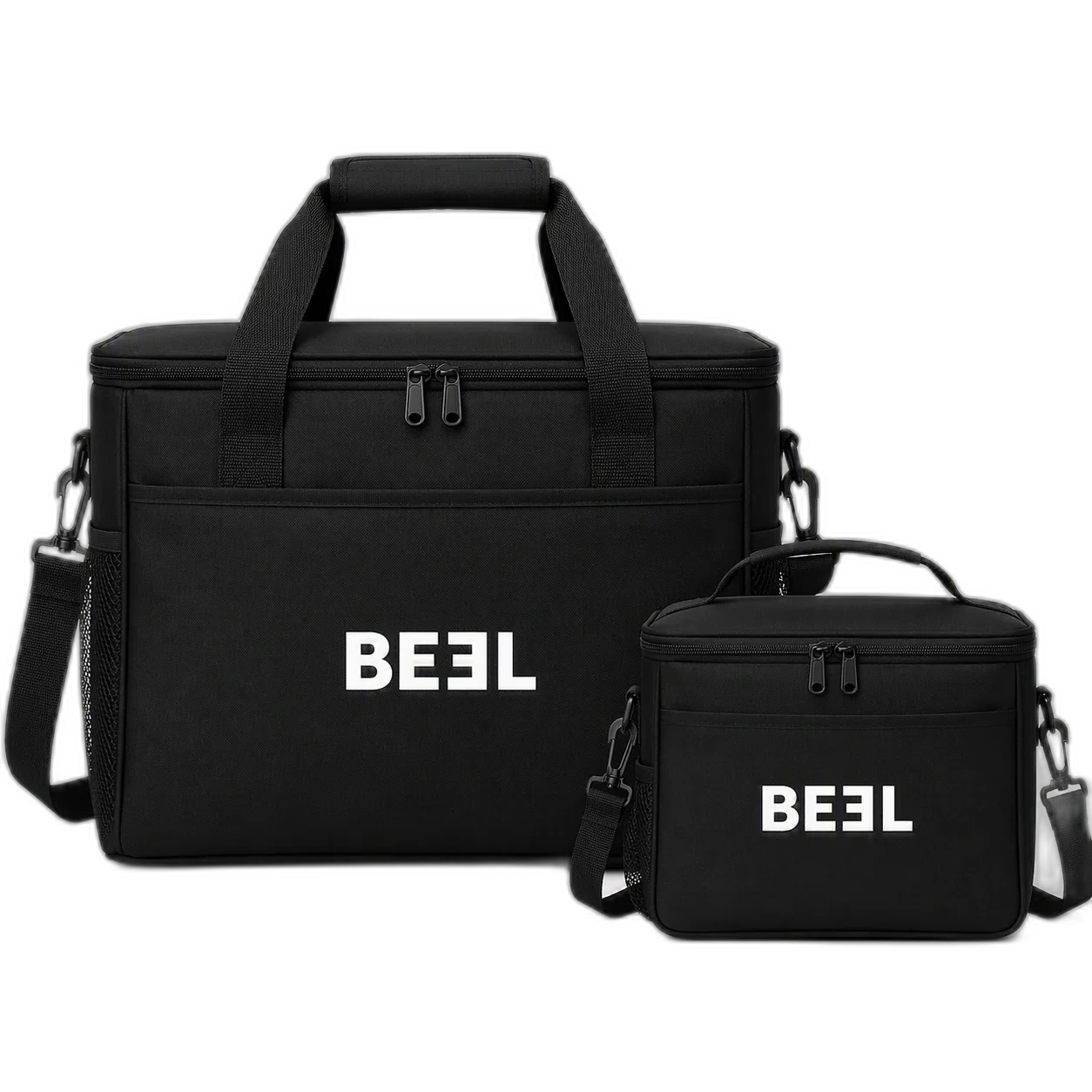
Buying in bulk? See our cooler and lunch bags, made at our Govandi, Mumbai factory with pan-India delivery.
Corporate gifting teams and FMCG sampling programs buy insulated cooler and lunch bags for two very different reasons, and treating them as the same purchase is where most bulk orders go wrong. A gifting team wants a bag that looks premium enough to be kept and used for years. An FMCG brand running a sampling drive wants a functional cooler that keeps a chilled product cold for a few hours at a festival stall or retail counter, at a price that works across thousands of units. Both buyers end up on our cooler and lunch bags page, but the right bag, the right material, and the right supplier conversation are not the same for each of them.
This guide walks through who actually buys insulated cooler and lunch bags in bulk, what separates a good supplier from a risky one, indicative pricing across both buying occasions, and the questions worth asking before committing to a large order.
Who buys insulated cooler and lunch bags in bulk
Corporate gifting and HR teams order premium lunch bags and small coolers as part of onboarding kits, festive hampers, or wellness gifting, usually alongside items like our corporate gifting kits. Build quality and finish matter more than raw insulation performance here, since the bag is meant to represent the brand every day at work, sitting on a desk or carried to a cafeteria rather than thrown around outdoors.
FMCG and beverage brands buy large volumes of basic insulated coolers for sampling activations, retail giveaways, and seasonal promotions. Cost per unit and consistent quality across a large batch matter far more than premium finishing, since these bags are typically a marketing spend line rather than a long-term branded asset.
Food delivery and catering companies use insulated cooler bags to protect temperature-sensitive items in transit, overlapping with our food delivery bags category but typically in a smaller, single-compartment format built for handheld carrying rather than a courier's back, and our dedicated insulated lunch bag range covers this format directly.
Retail and pharmacy chains occasionally order cooler bags as point-of-sale add-ons for customers buying temperature-sensitive products, a smaller but steady bulk-order category, and our cooler tote bag format is a common fit here.
Hotels and hospitality groups are a less obvious but genuine buyer, properties running poolside or in-room amenity programs occasionally order insulated bags as part of a guest welcome kit, a category we cover in more detail on our bags for hotels page.
What actually matters when choosing a cooler bag supplier
Insulation liner material. Foam-laminated PE liners hold cold temperatures noticeably longer than basic foil liners, but cost more per unit. For a sampling activation lasting a few hours, a basic foil liner is usually sufficient. For a premium gifting item meant to be used repeatedly, the better liner pays for itself in fewer complaints and returns over the bag's working life.
Food-safe certification. If the bag will be in direct or near-direct contact with food or beverage products, ask your supplier whether the liner material is food-safe certified. This is a question buyers frequently forget to ask and suppliers frequently forget to volunteer, and it matters more for beverage sampling and food delivery use cases than for a gifting-grade lunch bag that mostly carries a lunchbox rather than loose food or drink.
Seam and zipper waterproofing. Cooler bags fail first at the seams and zipper line, where condensation and ice-melt find their way out. Heat-sealed seams outperform simple stitched seams for any bag expected to hold ice packs or chilled bottles for more than an hour, and this is one of the clearest quality signals to check on a physical sample before committing to a large order.
Branding durability. Screen printing on the outer polyester shell holds up well for gifting-grade bags used over months. For single-use or short-campaign FMCG sampling bags, a lower-cost print process is a reasonable trade-off since the bag's usable life is measured in weeks, not years, and paying for premium branding durability on a bag that will be discarded after one campaign is an avoidable cost.
MOQ flexibility for two very different order profiles. A gifting order might be 100 to 500 premium units. An FMCG sampling drive might need 2,000 to 10,000 basic units delivered in a tight festival-season window. Confirm your supplier can genuinely handle both scales without one order profile becoming an afterthought, and ask specifically how they've handled a comparably large order in the past.
Materials and construction worth understanding
Outer shell fabric is typically 210D to 600D polyester, with higher denier numbers indicating a tougher, more abrasion-resistant fabric. For gifting-grade bags that need to survive daily commuting wear, 420D or higher is a reasonable minimum. For short-campaign sampling bags, 210D to 300D keeps costs down without meaningfully affecting the bag's short working life.
Insulation core sits between the outer shell and the inner liner, usually a foam layer that provides both the insulating barrier and some structural rigidity to the bag. Thicker foam holds temperature longer but adds bulk and weight, a trade-off worth discussing against your specific use case rather than defaulting to the thickest option available.
Inner liner is the layer in direct contact with whatever is being kept cold. As covered above, foil liners are the budget option and foam-laminated PE liners are the premium option, with a meaningful difference in both insulation performance and durability under repeated use.
Bulk pricing and MOQ (indicative)
Basic insulated cooler and lunch bags for FMCG sampling typically start from ₹60 to ₹120 per piece at volumes of 1,000+ units, depending on size and liner material. Premium corporate-gifting-grade cooler bags with better finishing and embroidery typically run ₹200 to ₹400 per piece, with MOQ starting at 100 units. Contact us for exact pricing based on your specifications and order timeline.
Standard lead time is 7 to 15 working days after design sign-off. For large FMCG sampling orders tied to a specific festival or campaign date, we recommend confirming your order at least 3 to 4 weeks ahead of the activation date to allow buffer for reprints if needed.
A practical ordering checklist
Before finalising a cooler bag order, it helps to have clear answers to a short list of questions: is this a gifting-grade order meant to last, or a sampling-grade order meant for a single campaign? What temperature retention duration does the actual use case require, a few hours at a stall, or a full day of transit? Does the product being carried require food-safe liner certification? And is this a one-time order or the first of a recurring seasonal campaign worth setting up a retained specification for? Having these answers ready before the first supplier conversation shortens the sourcing timeline considerably and avoids over-specifying (and overpaying for) a sampling-grade order, or under-specifying a gifting-grade one.
Sizing and format considerations
Corporate gifting lunch bags typically work best in a single-compartment format sized for one meal container plus a small ice pack, roughly 9 to 11 inches wide. This keeps the bag practical for a daily commute without becoming bulky enough to feel like a burden to carry. FMCG sampling coolers tend to be larger, since they often need to hold multiple bottles or product units for a single stall or event, and a 12 to 15 inch format with a wider opening makes restocking during a busy activation considerably easier for on-ground staff.
Hotel and hospitality amenity coolers, where relevant, tend to sit somewhere in between, large enough to feel like a genuine amenity rather than a token gift, but not so large that it becomes awkward for a guest to carry back to their room. Getting this sizing decision right during the brief stage avoids the common problem of a bag that looks right in a sample photo but proves impractical once loaded with the actual product it's meant to carry.
A note on sustainability
Reusable insulated cooler bags are increasingly positioned by FMCG brands as a lower-footprint alternative to single-use cold-chain packaging, particularly for beverage sampling where the alternative would otherwise be disposable ice boxes or styrofoam coolers discarded after a single activation. If sustainability messaging is part of your campaign communications, it's worth raising with your supplier at the design stage, since certain liner and outer fabric choices can be selected with this framing in mind without materially affecting cost or insulation performance.
Common mistakes worth avoiding
The most frequent mistake in this category is ordering a single specification for both a gifting program and a sampling campaign, when the two use cases genuinely call for different fabric grades and price points. A gifting-grade spec used for a sampling campaign wastes budget on durability the bag will never need. A sampling-grade spec used for a gifting program produces a bag that looks and feels cheap in a context where the brand is trying to signal quality.
A second common mistake is underestimating insulation requirements for the actual use duration. A basic foil liner is fine for a two-hour retail sampling window but will not hold temperature through a full-day outdoor festival activation, leading to warm product and a poor consumer experience that reflects on the sponsoring brand rather than the bag itself. Matching liner grade to actual use duration, not just to budget, avoids this.
What to expect from the ordering process
Most cooler bag orders start with a short conversation about use case (gifting or sampling), target insulation duration, and volume, which determines the right liner and fabric combination. A design proof follows for logo placement and colour approval, then production runs within the standard 7 to 15 working day window. For large FMCG orders tied to a specific campaign date, we recommend confirming at least 3 to 4 weeks ahead, and a physical sample from the actual production batch is available on request before full dispatch for orders above a few hundred units.
Comparing gifting-grade and sampling-grade cooler bags side by side
It helps to think of these as genuinely different products that happen to share a category name. A gifting-grade cooler bag is built around longevity: a higher-denier outer shell that resists daily abrasion, a foam-laminated liner that keeps performing after dozens of wash cycles, and embroidered or high-quality screen-printed branding that won't fade after a few months of regular use. The per-unit cost reflects that longevity, and the order volumes are correspondingly smaller, since the bag is meant to represent the brand for a year or more rather than a single event.
A sampling-grade cooler bag is built around cost efficiency at scale: a lighter outer fabric, a simpler foil liner sufficient for a few hours of temperature retention, and a print process that holds up for the duration of a single campaign without needing to survive repeated washing or months of daily wear. Ordering thousands of units at this specification keeps the overall campaign cost proportionate to what is, in most cases, a marketing spend rather than a long-term branded asset.
Confusing the two specifications is the single most common and most expensive mistake buyers make in this category, and it is worth spending five minutes at the start of any conversation with a supplier clarifying which of the two you actually need before discussing price.
Seasonal demand patterns worth planning around
FMCG beverage and ice-cream brands see a sharp seasonal spike in cooler bag demand heading into the summer months, when sampling activations and retail promotions cluster around the hottest weeks of the year. Corporate gifting orders for lunch bags tend to follow a steadier, less seasonal pattern, though they do see a modest bump around major onboarding cycles and festive gifting seasons. If your order falls into the summer FMCG sampling window, placing it well ahead of peak season avoids competing with every other beverage brand's bulk order for the same supplier capacity, which is when lead times tend to stretch beyond the standard 7 to 15 working day window.
Branding options and what actually works for each use case
Screen printing remains the most common and cost-effective branding method for both gifting-grade and sampling-grade cooler bags, and for most orders it's the right default choice. Embroidery is occasionally requested for premium gifting-grade bags where a more textured, higher-end finish matters, though it adds meaningfully to per-unit cost and is rarely worth it for sampling-grade orders given their shorter working life. Heat-transfer branding is a middle option worth considering for orders that need photographic-quality or multi-colour designs that would be prohibitively expensive to reproduce via screen printing at the same order volume.
Whichever method you choose, the branding decision should be made in the context of the bag's expected working life. There is little point paying for embroidery-grade durability on a bag that will be discarded after a single festival activation, just as there is little point cutting corners on branding durability for a bag meant to represent your company on an employee's desk for the next two years.
Working with a supplier who understands both buying occasions
Because gifting-grade and sampling-grade cooler bags are genuinely different products, it's worth confirming upfront that your supplier has real experience across both rather than defaulting to whichever specification they happen to be set up to produce most easily. A supplier who only regularly handles small premium gifting orders may struggle to deliver consistent quality across a 5,000-unit FMCG sampling order on a tight festival-season timeline. Equally, a supplier geared entirely around high-volume basic production may not have the finishing capability or attention to detail that a premium gifting order deserves. Asking directly which of these two profiles a prospective supplier's typical order looks like is a useful, low-effort way to gauge fit before committing to a large order.
How this fits alongside other bulk orders
Cooler and lunch bags are rarely the only item on a buyer's order sheet. Corporate gifting teams ordering premium lunch bags are frequently also sourcing onboarding kits, tech accessories, or festive hampers through the same supplier relationship, and consolidating these into a single vendor conversation reduces coordination overhead considerably compared to managing several suppliers each starting from scratch. FMCG brands running a sampling campaign are often also ordering point-of-sale materials, promotional apparel, or tote bags for the same activation, and a supplier who can quote across the full campaign brief in one conversation tends to move faster than one who only handles the cooler bag line item.
If your order sits at the intersection of cooler bags and food delivery or transit use, it's worth reviewing our food delivery bags range alongside this guide, since the insulation and durability considerations overlap substantially even though the buying occasion is different.
Questions to ask before you commit to a supplier
A short set of questions tends to separate a supplier who understands this category from one who is simply quoting a generic bag price. Ask what liner material they recommend for your specific insulation duration requirement, rather than accepting a single default answer regardless of use case. Ask whether they can show a physical sample from an actual production batch, not just a rendered mock-up, particularly for orders above a few hundred units. Ask how they've handled a comparably large order in the past, and whether they can speak to a specific example rather than a general capability claim. And ask directly whether their typical order profile leans toward premium low-volume gifting work or high-volume basic production, since the honest answer tells you a great deal about whether they're the right fit for your specific brief.
None of these questions take long to ask, and the answers are usually a far more reliable predictor of how smoothly your order will go than the initial price quote alone.
It's also worth asking about their approach to reorders. A supplier who retains your exact specification, liner grade, and colour reference from a first order will save you a genuinely meaningful amount of back-and-forth the next time your team runs the same campaign or onboarding cycle a year later, compared to starting the specification conversation over from scratch each time.
Over a few annual cycles, that retained-specification approach adds up to a meaningfully faster procurement process, freeing your team to spend more time on the campaign or gifting strategy itself rather than re-explaining bag specifications to a supplier each time the order comes around.
For any order above a few hundred units, treat the specification conversation as a one-time investment that pays off across every future reorder, rather than a formality to rush through on the way to a price quote.
A brief, well-documented specification today is what makes next year's reorder a quick email rather than a full sourcing exercise from the ground up.
That small upfront discipline is, in practice, one of the more underrated ways procurement teams save real time across a multi-year gifting or campaign calendar.
Frequently Asked Questions
What is the minimum order quantity for insulated cooler bags?
MOQ starts at 100 units for premium gifting-grade bags and can scale into the thousands for FMCG sampling orders with simpler specifications.
Is the liner material food-safe?
Yes, our standard liner options are food-safe certified. Let us know your specific use case and we can confirm the right liner grade for it.
Can you match our brand colours and logo exactly?
Yes, we work from Pantone references or existing brand assets to match colours and reproduce logos accurately within the print process chosen.
Do you offer both basic sampling-grade and premium gifting-grade cooler bags?
Yes, this guide exists precisely because these are different buying occasions. Tell us which use case you're ordering for and we'll recommend the right material and finish combination.
Can we reorder the same design for a future campaign or season?
Yes, we retain specifications from previous orders, which makes repeat seasonal or campaign orders faster to turn around.
Do you supply cooler bags alongside other corporate gifting items?
Yes. Many corporate clients pair cooler and lunch bags with our corporate gifting ranges or non-woven bags for combined gifting or promotional packages.