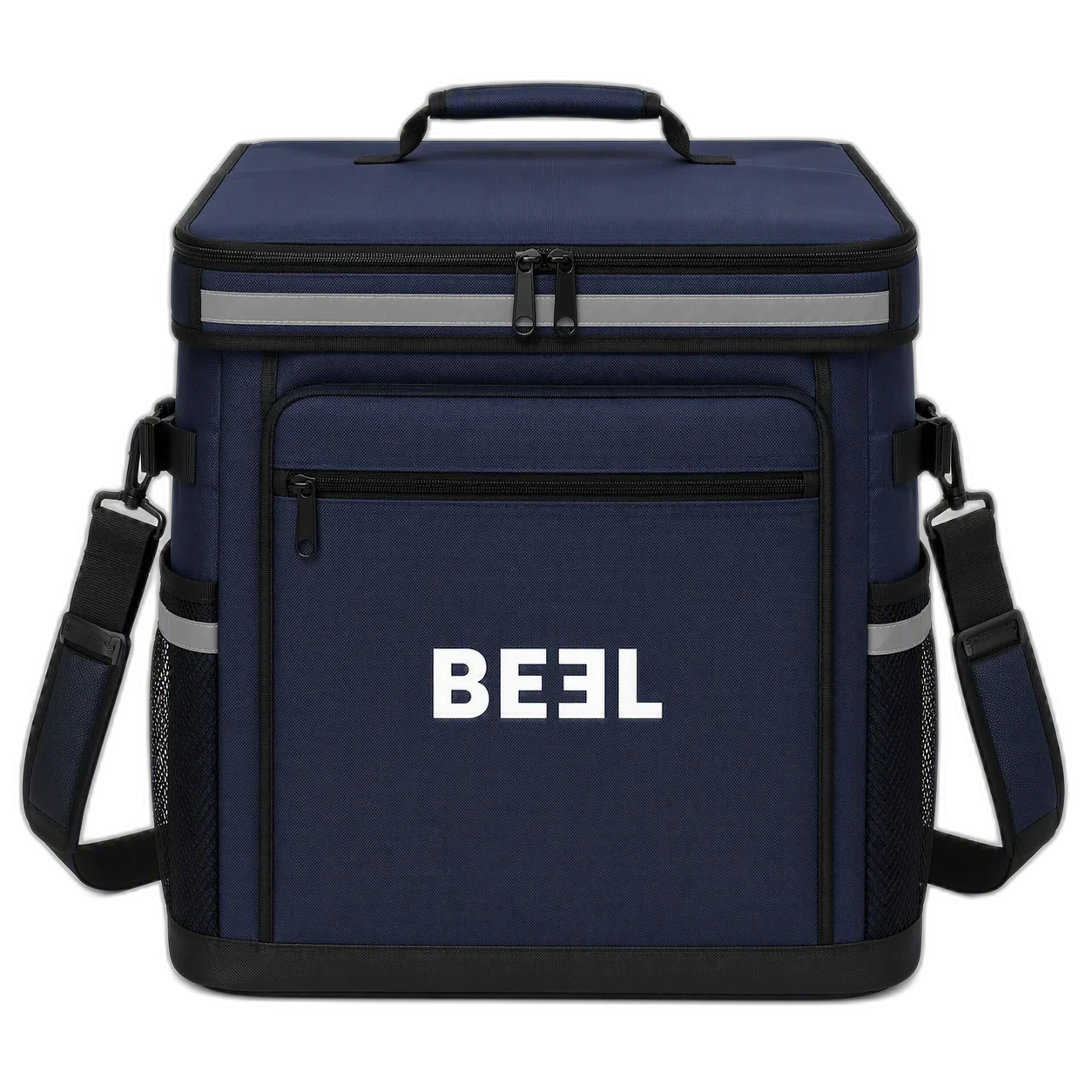
A food delivery bag looks like a simple product until you order a few thousand of them and half the batch starts leaking within a month. Restaurants, cloud kitchens, and delivery fleets buy these bags for a very different reason than a corporate gifting team buys a tote: this is operational equipment used daily, under real physical stress, and a failure directly affects customer experience and food safety, not just brand perception. Our food delivery bags range was built around that reality rather than treating this as a standard promotional item.
This guide covers who actually buys food delivery bags in bulk, what separates a supplier worth trusting from one that will cause problems on your busiest delivery day, indicative pricing and MOQ, and the questions worth asking before signing a supply agreement.
Who buys food delivery bags in bulk
Restaurant chains and franchise operators need consistent branding across every outlet's delivery fleet, which means colour, print position, and insulation quality all need to match exactly across what might be dozens of separate orders placed by different franchise locations over time.
Cloud kitchens and multi-brand kitchen operators often run several delivery brands out of a single kitchen, requiring different branding on otherwise identical bags — a use case that rewards a supplier who can handle small-batch customisation efficiently rather than only large single-brand runs.
Food delivery platforms and their fleet partners buy at the largest scale, often needing tens of thousands of units with platform-standard branding distributed across a wide geographic delivery network, which is a genuinely different logistical challenge from a single restaurant's order.
Grocery and quick-commerce delivery services have overlapping but distinct requirements, often needing our grocery delivery bag format rather than the single-compartment pizza-style bag most food delivery riders use, since grocery orders involve more varied item sizes and weights.
Pizza chains specifically represent one of the oldest and most standardised use cases in this category, with our dedicated pizza delivery bag format built around the flat, wide profile pizza boxes require.
What actually matters when choosing a food delivery bag supplier
Insulation performance. A bag that cannot hold heat for a 30 to 45 minute delivery window is not fit for purpose, regardless of how it looks. Ask your supplier for actual temperature-retention figures rather than a generic insulation claim, and where possible, test a sample over a real delivery-length duration before committing to a large order.
Leak-proofing and cleanability. Food delivery bags get exposed to spills, condensation, and grease on a near-daily basis. A wipeable, heat-sealed interior lining is not optional for this category the way it might be for a gifting-grade bag used occasionally.
Durability under daily heavy use. Unlike a bag handed out once at an event, a delivery rider's bag gets loaded, unloaded, and thrown into a vehicle dozens of times a day. Reinforced stitching at handle and strap attachment points is a meaningful durability factor worth checking on a physical sample rather than assuming from a product photo.
Repeat-order and supply-agreement flexibility. This is a category defined by recurring orders as fleets grow and bags wear out, not one-off purchases. We work with restaurant and delivery clients on regular supply agreements, which means a standing specification and predictable reorder timeline rather than renegotiating terms from scratch every time stock runs low.
Materials and construction
Outer shell. 600D to 900D polyester is standard for delivery bags given the daily wear they need to withstand, considerably tougher than the 210D to 300D fabrics sometimes used for lighter-duty gifting bags.
Insulation layer. A thicker foam core than a typical cooler bag is usually justified here, since food delivery bags need to maintain temperature for the full delivery window in varied outdoor conditions, not just a few hours at a controlled indoor event.
Interior lining. Heat-sealed, wipeable PE or foil linings are the standard for this category, chosen specifically for ease of cleaning after spills rather than for cost efficiency the way a basic sampling-grade cooler bag liner might be.
Bulk pricing and MOQ (indicative)
Insulated food delivery and pizza bags typically start from ₹180 to ₹350 per piece depending on size, insulation grade, and print complexity, with MOQ starting at 50 units. Contact us for exact pricing based on your specifications and expected order frequency.
Standard lead time is 7 to 15 working days after design sign-off, with regular supply agreements available for restaurants and fleets needing predictable recurring stock rather than one-off orders.
Sizing and format considerations for different delivery types
Pizza delivery bags need a wide, flat profile matched to standard pizza box dimensions, typically accommodating boxes from 10 to 18 inches without crushing the contents, and our pizza delivery bag range is built specifically around this shape rather than adapting a general-purpose cooler format. General food delivery bags used for multi-item orders — biryani, curries, multiple containers — benefit from a squarer, deeper profile with internal dividers to stop containers tipping over during transit, an important detail that's easy to overlook until riders start reporting spilled orders.
Grocery delivery bags are a different shape problem entirely, needing a wider opening and more rigid structure to handle uneven weight distribution from a mixed grocery order, which is why we treat this as a genuinely separate product line in our grocery delivery bag range rather than a variant of the standard food delivery bag.
Rider ergonomics and daily-use practicality
Bags used by delivery riders on two-wheelers face a different set of practical constraints than a bag carried by hand or stored in a car. Backpack-style delivery bags, covered in our food delivery backpack range, need padded straps rated for hours of continuous wear and a stable base that doesn't shift the load awkwardly while riding. A rigid internal frame or base board, while a modest additional cost, meaningfully reduces the food-shifting problem that riders complain about most often with lower-quality delivery bags, and is worth specifying explicitly rather than assuming it's included as standard.
Handle and strap attachment points are worth inspecting closely on any physical sample, since this is the most common failure point on delivery bags subjected to dozens of load-unload cycles a day, considerably more wear than almost any other bag category we supply.
A note on hygiene and food safety compliance
Food delivery bags sit closer to food-safety scrutiny than most other bag categories, given their direct daily contact with food products being transported to end consumers. Interior linings should be food-safe certified, and the wipeable, heat-sealed construction described earlier is as much a hygiene requirement as a durability one. Restaurant chains and cloud kitchen operators working under their own food-safety audits should confirm this certification is available in writing from their bag supplier, since it's increasingly a question raised during broader operational audits, not just a nice-to-have specification.
Common mistakes worth avoiding
The most frequent mistake in this category is under-specifying insulation and durability to save a small amount per unit, only to face a much larger cost in customer complaints, replacement bags, and rider dissatisfaction within a few months of daily use. A bag that costs ₹30 less per unit but needs replacing twice as often is not actually the cheaper option once replacement frequency and the operational disruption of riders working with failing equipment are factored in.
A second common mistake is treating a first bulk order as a one-time purchase rather than the start of a recurring supply relationship. Fleets grow, bags wear out on a predictable cycle, and franchise networks expand — setting up a standing specification and supply agreement from the first order, even a modest one, saves considerable time on every subsequent reorder compared to renegotiating specifications from scratch each time.
What to expect from the ordering process
Most delivery bag orders start with a conversation about delivery type (pizza, multi-item food, grocery), typical delivery duration and radius, and expected order frequency, which determines the right insulation grade and whether a backpack or handheld format fits best. A design proof follows for branding approval, then production runs within the standard 7 to 15 working day window. For fleets or franchise networks planning a recurring supply agreement, we recommend having this conversation explicitly at the first order stage rather than after the initial batch runs out, so that reorder lead times and specifications are already agreed before they become urgent.
Comparing supplier types for delivery bag sourcing
Restaurant and delivery operators evaluating suppliers for this category tend to encounter three broad types. General promotional-products suppliers can produce a branded bag but rarely have deep experience with the insulation and durability demands specific to daily food delivery use, meaning the first batch often reveals problems only after a few weeks of real-world wear. Specialist packaging suppliers focused purely on insulation (cold-chain, pharma cold packs) understand the thermal performance side well but may lack the branding and print consistency experience that a customer-facing delivery bag needs. A supplier who works specifically across food delivery, cloud kitchen, and fleet clients tends to have already solved both problems simultaneously, since insulation performance and branding consistency are both core to what makes a delivery bag genuinely fit for purpose.
Asking a prospective supplier directly how many restaurant or delivery-fleet clients they've worked with in the last year, and whether they can share a reference from a comparable order size, is a quick way to separate genuine category experience from a generalist quoting a standard bag price without understanding the operational stakes involved.
Seasonal and demand-driven planning
Food delivery volumes, and therefore bag replacement and expansion needs, tend to spike around major festival seasons and extreme weather periods when delivery order volumes rise sharply. Fleets planning ahead of these predictable demand spikes, rather than reacting to a bag shortage once it's already affecting rider capacity, are in a considerably stronger negotiating and lead-time position than those placing urgent orders during peak season when supplier capacity is stretched across multiple clients simultaneously.
New restaurant launches and franchise expansions represent a second predictable demand driver worth planning bag orders around well ahead of the actual launch date, since branding, packaging, and delivery equipment orders often compete for the same pre-launch timeline and budget approval cycle internally.
Branding considerations specific to delivery bags
Unlike a gifting-grade bag seen once by its recipient, a delivery bag is effectively a mobile billboard seen by every customer at their doorstep, multiple times a day, across potentially years of use. This makes branding durability a genuinely commercial consideration rather than a cosmetic one — a faded, peeling logo on a delivery bag reflects poorly on the restaurant or platform brand at exactly the moment a customer is forming an impression of the service. Screen printing with a durable outdoor-rated ink, or heat-transfer branding for multi-colour logos, both outperform basic print processes under the sun exposure and handling frequency this category involves.
Reflective elements or high-visibility branding are worth considering for delivery bags used by riders working in low-light conditions, both as a safety consideration and as an additional branding surface that's specific to this category rather than something a general promotional bag supplier would necessarily think to offer.
Setting up a supply agreement that actually works long-term
A well-structured recurring supply agreement for delivery bags typically covers three things: a retained specification (fabric, insulation grade, branding) so every reorder matches exactly regardless of who places it or when, an agreed reorder lead time that accounts for your typical bag replacement cycle rather than requiring a fresh negotiation each time, and a volume-based pricing tier that reflects your actual annual order pattern rather than treating each order as an isolated transaction. Restaurant chains and delivery platforms who set this up early tend to spend considerably less operational time on bag procurement over a multi-year period than those managing it as a series of one-off purchases.
It's worth revisiting this agreement periodically as your fleet grows or your delivery mix shifts — a chain that started with primarily pizza delivery and has since expanded into multi-item food delivery may need to adjust bag shape and insulation specifications, and a supply agreement that's reviewed rather than left static tends to serve fast-growing operators considerably better.
How delivery bags fit into a broader operational equipment order
Delivery bags are rarely the only equipment line item a restaurant or platform is sourcing at once. Uniforms, rider safety gear, and branded packaging materials often move through procurement on a similar cycle, and a supplier who can quote across a broader operational equipment brief, not just the bag itself, tends to reduce vendor-coordination overhead for growing chains. If your organisation also runs corporate-side gifting or onboarding programs for office staff, alongside a separate delivery fleet, it's worth reviewing our corporate gifting range as well, since consolidating both categories with a supplier who understands both use cases can simplify vendor management considerably.
Hospitality groups running in-house food delivery or room-service operations, in addition to guest-facing amenities, may find our bags for hotels range relevant alongside this delivery bag guide, since the two categories sometimes overlap in a single property's procurement needs.
Questions worth asking before signing a bulk delivery bag order
A short set of direct questions tends to reveal whether a supplier genuinely understands this category. Ask for real temperature-retention data specific to your typical delivery duration and radius, not a generic insulation claim. Ask to see a physical sample that's been through simulated daily-use stress, particularly at handle and strap attachment points, rather than relying on a fresh, unused sample alone. Ask whether they currently supply any comparable restaurant chain or delivery fleet, and if so, at what order volume and over what time period. And ask directly how they structure supply agreements for recurring orders, since a supplier without a clear answer to this question likely treats every order as an isolated transaction rather than a long-term operational relationship.
These questions take only a few minutes to raise during an initial supplier conversation, but the quality of the answers is usually a far more reliable indicator of how the relationship will hold up over a fleet's first year of daily bag replacement and reorder cycles than the initial price quote alone.
Why insulation grade should be matched to your actual delivery radius, not a generic standard
One of the more common inefficiencies we see in this category is a chain applying a single insulation specification across a delivery radius that actually varies considerably by location. A dense urban outlet with 15-minute average delivery times has genuinely different insulation needs than a suburban or highway-adjacent location averaging 40-minute deliveries, yet many operators default to whichever specification the head office negotiated first, without revisiting it for outlets with meaningfully different delivery profiles. Reviewing actual delivery-time data by location before finalising a fleet-wide bag specification can reveal that a slightly higher insulation grade for longer-radius outlets, and a correspondingly lower-cost specification for short-radius ones, produces better real-world food quality outcomes at a similar or even lower blended cost than a single uniform specification across the whole network.
This kind of location-specific analysis takes a little more effort at the sourcing stage but tends to pay for itself many times over across a large multi-outlet fleet, both in reduced customer complaints about food temperature and in avoiding unnecessary overspend on insulation capacity that shorter-radius outlets never actually need.
Planning bag replacement cycles rather than reacting to failures
Delivery bags subjected to daily heavy use have a predictable working life, typically somewhere between eight months and two years depending on fabric grade and actual usage intensity. Operators who track approximate replacement cycles per outlet and place reorders proactively, rather than waiting for riders to report a bag has finally failed, avoid the operational disruption of a rider working without proper equipment for however long an urgent replacement order takes to arrive. Building a simple rotation schedule into fleet management, even a basic one based on issue date, is a low-effort way to convert this category from reactive firefighting into predictable, planned procurement — which also tends to produce better pricing, since planned reorders rarely carry the premium that genuinely urgent, short-lead-time orders sometimes do.
A supplier who can quote against a planned rotation schedule, rather than only responding to one-off urgent requests, is generally better positioned to support this kind of proactive approach and worth prioritising over one who only deals in reactive single orders.
It's a small shift in approach, but one that compounds meaningfully in cost and reliability across a fleet operating hundreds of bags over several years.
Treat bag replacement the same way you'd treat any other predictable operational cost, and it stops being a recurring fire drill for your procurement team every time a batch finally wears out.
A supplier who understands that framing tends to be the one worth building a multi-year relationship with, rather than one treated purely as a transactional print vendor.
That distinction alone is often the clearest signal of whether a partnership will still be working smoothly for your fleet a few reorder cycles from now.
Frequently Asked Questions
What is the minimum order quantity for food delivery bags?
MOQ starts at 50 units. Smaller custom runs may be possible depending on specifications.
How long does the insulation hold temperature?
Standard insulation is designed for typical 30 to 45 minute delivery windows. Let us know your typical delivery radius and we can recommend the right insulation grade.
Can the interior be wiped clean after spills?
Yes, our standard interior lining is heat-sealed and wipeable, designed specifically for daily food delivery use.
Do you offer regular supply agreements for recurring orders?
Yes, this is one of the most common arrangements we set up in this category, with a standing specification so reorders are fast and consistent.
Can you match branding across multiple franchise locations?
Yes, we retain exact colour and print specifications so every location's order matches regardless of when it's placed.
Do you supply grocery delivery bags as well as food delivery bags?
Yes, see our dedicated grocery delivery bag range for that use case, which differs in shape and compartment design from a single-meal delivery bag.